Home Blog Page 256

CMRC Recruits Help To Save Johnson Valley OHV Area

The California Motorized Recreation Council Employs Top Washington, DC Lobbyists to Help Save the Johnson Valley OHV Area
 
The California Motorized Recreation Council (CMRC), an umbrella group of the eight largest OHV access groups in California, has agreed to contract terms with the Livingston Group, LLC in Washington, DC to help stave off the expansion of the 29 Palms Marine Base.

The move comes on the heels of the expected April 27th, 2012 release of a Final Environmental Impact Study (FEIS) by the Marine Corps.

The Marine Corps wishes to annex approximately 160,000 acres of the Johnson Valley Off-Highway Vehicle area, which is the largest open OHV area in the United States and contributes over $70 million dollars into the economy of the surrounding High Desert communities annually.
 
The Marine Corps proposal would limit motorized recreation to less than one percent of the entire California Desert, a move in which the Off-Road Business Association (ORBA) contends will cripple the already battered off-road manufacturing industry and increase the likelihood of resource damage and safety concerns at the remaining OHV areas.

“Our industry has continued to grow at steady pace since the late 1970s, while in that same time period we have lost 48% of the recreational opportunities in the California Desert.” Fred Wiley, the president of the Off-Road Business Association went on to say, “While we support the training needs of our military, it is a bitter pill to swallow losing such a massive piece of our public lands, considering the limited time the Marine Corps plans to utilize this portion of the desert.”
 
According to a draft EIS, the Marine Corps only plans to hold training exercises 24 days each year in Johnson Valley.

While the expected proposal does allow for a limited shared use of a portion of the OHV area, event promoter Dave Cole, who produces a large off road race in Johnson Valley, believes, “The current shared use alternative has no language for securing the perimeter of the expansion, and that’s a set up for a dangerous situation for the public. They don’t currently secure the base line now, and most of the public has no idea they are wandering on to the base. It will be 10 times worse if they expand.”
 
“Our primary objective was to figure out a way in which everyone could get what they needed. Rather than draw a line in the sand, we are proposing the Marine Corps work with us to meet those needs. To accomplish our goals, we had to pass our message to professionals in DC, and that’s where the Livingston Group comes in.” Jerry Grabow, American Motorcyclists Association District 37 Off-Road President, went on to say, “It’s a departure from our normal way of dealing with the loss of OHV recreation opportunities.”
 
Unifying a diverse group of OHV enthusiasts from across the state, CMRC delegates voted overwhelmingly to support the contract with the Livingston Group.

The move supports a re-enforced position by off-roaders who are willing to go all the way to Washington, DC to maintain motorized recreation in Johnson Valley.

A strategy that hopefully provides for future generations to experience the last great expanse of desert that OHV users may enjoy.
 
There are a number of issues that will need to be addressed if the Marines wish to push forward with their expansion into Johnson Valley, among them the demonstration of need. With tremendous budget cuts looming for our armed forces, there remains a question of weather the Marine Corps can even afford to assemble the troops they hope to train in the new expansion area and then there is the changing mission of the Marine Corps that appears to be a return to their amphibious roots.

The 29 Palms Marine base currently claims title of the second largest military base in the world, and presently resembles the sheer size of ¾ the state of Rhode Island. Only the neighboring Fort Irwin Army base is larger, which is located only miles away.

About the California Motorized Recreation Council – The California Motorized Recreation Council (CMRC) is a non-profit association comprised of the leadership of the largest off-highway vehicle recreation organizations in California. CMRC membership includes, the Off-Road Business Association (ORBA), California Association of 4-Wheel Drive Clubs (Cal4Wheel), California Off-Highway Vehicle Association (CORVA), American Motorcyclists Association National (AMA), American Sand Association (ASA), California-Nevada Snow Mobile Association (CNSA), AMA District 36, and AMA District 37 Off-Road.

WEAK POLARIS AXLES

Dear Motorhead:

I enjoy watching your show and have a question. With you fellows being out about the country have you heard anything about Polaris 2012 550 2 up axles breaking?

My wife an I are thinking about buying a new Polaris so we can both ride and be safe, but there appears to be some type of axle problem when you read some of the forums.

I have an older Yamaha from the 90’s and never had any trouble with axles. When I buy I would like to make sure I’m getting something that will last.

Thanks for input.

Butch

Thanks for your email!

We have heard of no such issue with any Polaris 4×4. The story is suspect as the axles on both the one up Sportsman 550 and 800 are identical to the two-up rear axles.

If they were failing there would be way more one up failures reported. This smacks of what we hate about internet forums – people with an axe to grind can create falsehoods and hide in anonymity.

Buy the Sportsman two up you want – they are a great, reliable ride! We have literally thousands of trouble free miles on them.

Motorhead Mark

WHO HAS THE BEST 4-WHEEL DRIVE SYSTEM?

0

There are basically two types of 4-wheel drive available on ATVs these days.

The first is part-time 4WD like you see on Yamaha, Suzuki, Honda, Arctic Cat and Kawasaki.

With these systems, you can select whether or not you want to be in 4×4 by flipping a switch.

There’s also a diff-lock switch that enables the front wheels to be locked so power is transmitted evenly left to right. This is great technology and definitely is capable of getting the job done.

An alternative and widely used system is full-time 4-wheel drive and this setup is used by Polaris and Can-Am.

Full-time or All-Wheel Drive means you can leave the vehicle in 4×4 mode all the time or you can select to leave it in 2WD.

There’s no penalty through the handlebars with increased effort when you’re in 4×4.

Can-Am, uses a viscous coupling (trade name: Visco-Lock) that senses when 4WD is needed, automatically engages it and then automatically locks up the front left and right wheels for maximum traction.

The Polaris system operates nearly exactly the same except it doesn’t use a viscous coupling. Polaris uses a mechanical “hilliard” system in the front differential to automatically select 4WD and also to apply locking to the front differential.

The system can sense when more traction is required and it allows both automatic differential locking and auto 4WD selection on the fly.

From a pure user-friendliness perspective, the Polaris and Can-Am 4×4 systems are pretty cool.

No fear going into a mud hole that you may have forgotten to engage 4WD and now you’ll lose momentum. Just nail the throttle and hang on – you’re guaranteed to be in the correct mode.

We really like the part-time systems out there and they are so refined nowadays, you’d almost have to be an idiot to mess things up with them.

However, full-time 4WD is just too good to ignore.

CHINA MAKES THE BEST KIDS ATV

Dear Motorhead:

This is a response to your commentary on off shore ATV’s being banned in the US.

I just wanted to comment that the youth market in general is a FARCE. I started with the Chinese ATVs for my 6 an 8 year old and believe it or not I’d go back to the Chinese model before I would go back to Polaris or Yamaha or just about any of the big guys.

Why you may ask? BRAKES! at least the Chinese use disk brakes. I purchased (at a premium) two Polaris Outlaw 90s for my kids in 2007 (we’ve moved to small adult machines now). THEY are junk, just as bad with suspension as Chinese (junk) but with DRUM brakes!

If the big guys really cared about the kids they would be using DISK brakes front and back. The 2012 Outlaw STILL uses DRUM brakes.

So get off your high horse with the training dribble. That’s MY JOB! GET them (the OEMs) to provide a stable machine capable of handling the trails.

They are all junk, but at least the Chinese ATVs are affordable.

Give me a break with the “THEY CARE” dribble.

Hugs and Kisses,

Randy W
Milford OH

Randy!

Thanks for your email!

Hope you feel better after venting on me!

Here’s the facts – with the exception of Kymco there are no off-shore-Pacific Rim ATV builders who have a credible dealer net work that could supply a spark plug as a replacement part let alone a set of brake pads! The chinese ATV biz is in ruins.

I won’t argue with you over issues with your brand name kids ATV’s reliability or performance however – the big seven OEM’s who did or currently build youth’s ATV’s all still supply replacement parts and service – and that my friend makes all the difference.

We have readers and viewers who own off-shore ATV’ s who cannot get so much as a wingnut because there’s no dealers and no distributors left on these shores.

Thanks for your vigorous opinion – I appreciate your frustration.

Motorhead Mark

DREAMING A LITTLE BIGGER

0

If you could dream up your ultimate ATV or side-x-side what would your design look like?

Would it be low-slung like the Polaris RZR line or maybe a little more like the original Yamaha Rhino?

Would it have a 60-65-inch width or maybe a little narrower at 50-55-inches to fit down most trails?

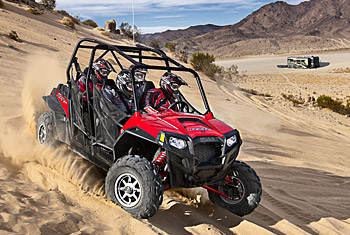
Personally, I want something that my family can enjoy and when they’ve had enough, I can take out and rock the trails myself. This is exactly where 4-seater side-x-sides like the RZR 4 simply shine.

I have to wonder whether the manufacturers will streamline their current lines to cater more to the enthusiast buying patterns and you can bet there will be more powerful engines available as we move forward.

I recently chatted with a few friends who think Polaris could eliminate the 50-inch RZR 800 because of the overwhelming popularity of the RZR XP900.

Personally, I’m not convinced. Polaris is currently filling the needs for just about every segment of the market. Eliminating this engine size doesn’t make sense, but perhaps a new engine might show its face to replace it sooner than later. Perhaps one based on the ProStar series similar to that available in the XP900 or RZR 570.

The power to weight ratio for the lower yet super powerful displacement of the 570 throws a bit more credibility into this train of thought. The question remains whether the masterminds behind the RZR lineup would make this bold move.

Knowing Polaris as we do, we have to think they’re probably already working on something.

INSURANCE FOR ASSURANCE

0

We’ve talked about how easy it is for an ATV or side-x-side to be stolen if the proper precautions are not taken, which makes it easy to see how important insurance could be.

Yes, its a wise decision to insure your ride against theft, but its equally important to have some personal assurance for incidences on the trail.

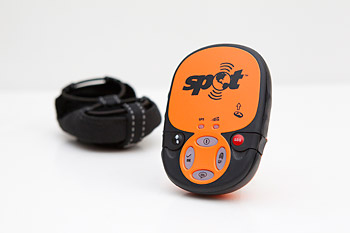
After extensive research on SPOT, I finally invested in one of these personal protection device and its wide variety of emergency options.

I felt like the price of the initial product was fair and then began to worry about the extra money it cost to actually have the device operable.

It wasn’t until I went to a foreign country to cover a race that I really thought about just how much protection this little gem offered.

If I were to get injured and there was no one to help, I could press a small button and in a matter of time there would be local officials on site to help me.

The fact that my total initial investment was less than $250 is a small price to pay for security during a life or death situation.

In addition to that I would be flown out of a foreign country and transported to my home state hospital for an additional $12 per year.

These costs are legitimate concerns that many think are too expensive to invest in until they’re are in a position where they may need this type of assurance.

Sometimes a small ding to your finances is worth it if it keeps you and your family close to help the event of an emergency.

Find more at international.findmespot.com

RZR 570 MAKES INCREDIBLE SENSE!

0

Certainly, there’s no argument about the prominence of high performance side by sides and the way the marketplace is in a fever about them.

One problem with this relatively new segment is there are not enough used ones out there, especially ones in good condition, to provide an entry-level buyer with the opportunity to get into the segment. How do you find a good used RZR for cheap bucks?

Sure, there are some used two and three-year-old RZRs out there – usually owned by riders who have moved up to a new XP900 or have switched brands to the Wildcat. However, these are usually snapped up rapidly and end up being as rare as hen’s teeth – and still pretty pricey.

Polaris has an answer. With the RZR 570 you get a brand new SxS with a warranty and much of the updated tech you’ll find in the XP900.

This RZR is very light (only 970 lbs – 300-plus lbs lighter than some competitors), has a low, transverse mounted, super torquey 567cc EFI single and is priced at a very reasonable $9,999.00 US.

Sure, it only comes with steel wheels and its narrow 50-inch width is both a good thing and a bad thing depending on where and how you want to ride.

The point is, you can upgrade to different wheels and tires and make modifications and still have a very reasonably priced, impressive performing performance SxS.

The bonus is that you still have a really good chassis under you and a power-to-weight ratio that puts you into the range of some side by sides with 200ccs more displacement.

BELT SLIPPAGE ISSUE AS INDICATED BY YAMAHA

Dear Motorhead:

Love your show! I’m considering a 2012 Outlander 650 XT. Does the drive belt slip in the clutch and burn up like the Yamaha videos show on the Yamaha website or has this problem been fixed?

If it does, I will probably go with a Grizzly instead.

Please respond.

Thanks,

T

Thanks for your email!

Here’s the deal. All Can-Am and Polaris ATVs and certain models from other OEM’s use a CVT system which engages the drive belt to initiate movement as RPM rises.

This is why the CVT tranny used in ATV’s (pioneered and in use in snowmobiles as well) uses the term “clutch” for the transmission. Essentially, the Can-Am/Polaris system acts like an automatic clutch at engagement RPM.

Yamaha, Suzuki and certain other models from other OEM’s use a CVT system employing a “sprag” or centrifical clutch device (similar to a chain saw drive clutch) mounted on either the crankshaft behind the primary pulley or on the jackshaft behind the secondary pulley.

This system sees the drive belt always “engaged” In other words the drive belt is not asked to be pinched every-time you initiate movement.

The sprag clutch behind the primary or the secondary when spun fast enough engages and initiates movement. The system which sees the sprag located behind the secondary is very good in cold weather as it allows the primary and secondary to spin as soon as the engine starts and helps warm the drive belt.

Now, which system is better – the Can-Am/Polaris set-up or the Yamaha/Suzuki system? If you subject your ATV to repeated engagement events under heavy loads and don’t select low range (such as when slogging deep mud or plowing snow or towing a heavy load) you will heat up the drive belt and could “dent” it by literally burning the primary pulley into the drive belt. Not good.

However, if you select low range this situation is highly unlikely to occur. In the case of the sprag clutch system repeated engagement under heavy loads in high range will eventually hurt the sprag clutch, over heating it and generally deteriorating the sprag – but it will likely not create a failure situation until you’ve done this many times over.

In my opinion a Can-Am is no more susceptible to clutch and belt issues than any other ATV when used properly (low range when loaded heavily).

Keep in mind the system used by Can-Am and Polaris is subject to way, way more load and abuse in snowmobiles which typically have anywhere from 80 to 175 HP going through the CVT with belt engagement. This kind of load is exponentially higher than any current production ATV and it is handled with exceptional reliability.

There you go!

Motorhead Mark

Yamaha Racers Comment On 2012 GNCC Season

Yamaha Motor Corp., U.S.A., has a deep and talented team competing in the Grand National Cross Country (GNCC) ATV series this year with three racers in early contention for their respective pro-level championships after the first three rounds of the year.

Led by Bill Ballance and Ballance Racing, Taylor Kiser and Walker Fowler are both in the running for the XC-1 crown.

Kiser is a solid second overall in XC-1 points and is fresh off a big win at Steele City, while Fowler is currently in fourth overall in his inaugural XC1 season.

Yamaha’s Traci Cecco, a GNCC series veteran and seven-time Women’s pro champion, is a close second so far this season only one point back from the overall lead.

Heading into the fourth round of 2012 at the famous Big Buck course in Union, South Carolina, the Yamaha GNCC racers talked about the current season, their teammates and competition, and shared some thoughts and expectations for the rest of the year…

Bill Ballance Question: You’re widely known as the best Off-Road ATV racer of all time and while you haven’t announced any plans to officially retire from racing, you’re transitioning more into a team management role – tell us about Ballance Racing and how you approach your new job.

BB Responses:

The first priority is the race team. Our team provides full race support to Taylor Kiser and Walker Fowler in the GNCC race circuit. We also provide some support to Thomas Brown on the MX side.

The second side to Ballance Racing is aftermarket sales and support. We sell all of the race products from companies that sponsor our race program. Also, we build complete race quads.

Ballance Racing started as me competing and winning championships and has transitioned into a program that supports both riders and sponsors on and off the track.

My role as team manager includes many responsibilities and those change from day to day. I spend numerous days testing on the track, which requires me to do lots of riding – this being my favorite part!

Other days my time is filled by taking orders from customers, building shocks, setting up race quads, talking to sponsors, and keeping up with what the guys are doing and needing.

A big part of my job is developing and testing for companies like Lone Star, Ohlins, Maxxis, and Moto-Xperts. I even build and fine tune maps for ECUs.

The transition has been difficult in some ways. When we are at the races and the guys line up on the starting line, it is hard for me not to be a part of that.

However, in some ways it has been pretty easy because of the attention to detail that I give to every working part of the race bike is natural to me. I do this just the same way I did with my own race quad.

I try to give the guys the equipment they need and the knowledge I have gained over the years. I want to see them win, and I strive for nothing less.

Bill Balance Question: Tell us about the upcoming GNCC University. You have a lot going on with running Ballance Racing, working with sponsors and even continuing to race some yourself. How do you find time to donate to this program, and what do you get from working with young racers?

BB Response: The GNCC U is a great! Being able to have this riding school at Snowshoe makes this event special.

Working with the kids is always a good reminder of how fortunate we are to be in the position we are in – being able to do what we love. This gives us a great opportunity to pass along some of our knowledge and skills to the younger racers and to give back to the sport.

It’s a great feeling to actually have time to spend with these kids and answer some of their questions.

At the races, it seems like we are always pressed for time and having events like these gives us time to relax a little and focus on them. We hope this will help to build our sport for the future!

Bill Ballance Question: Do you have any expectations for this season?

BB Response: Oh yeah, I sure do! IÂ’m expecting Taylor and Walker to be in a position to bring home a GNCC Championship this year!

Taylor Kiser Question: Congratulations on the big win at Steele Creek. Is there something in particular that you can point to that put you over the top?

TK Response: Thanks! I really can’t point to one thing that put me over the top. I have had a strong group of supporters behind me keeping me motivated. The YFZ450R has been working great, and everything is starting to come together!

Taylor Kiser Question: You’ve been working with Bill Ballance for a couple of years now. What’s the best part of being on Ballance racing?

TK Response: Working with Bill is great! He is by far the best suspension guy in the business. He is always coming up with new ideas to improve our race quads.

I can go to the line week in and week out knowing that I am on the best set-up equipment out there.

Taylor Kiser Question: Some might argue that you and Walker make up the toughest team on the tour. Do you guys spend a lot of time training together? Do you have a friendly competition or is it every man for him self?

This winter was really the first time that Walker and I have spent any time together. He came down and lived at my place in Florida for the winter. I felt like it was a tremendous help to both of our programs for him to come down.

He lives in Ohio, so we don’t get a chance to ride that much together during the season, but whenever we have the chance, I definitely enjoy training with Walker.

We have a pretty friendly competition. Whenever we can get together on the track, I feel like it is a benefit to both of us, because you have someone there you are comfortable riding with, and you know will help push you!

Walker Fowler Question: So, you’ve been winning championships your entire career, but this is your first XC-1 Pro season. Any expectations?

WF Response: Being my rookie XC1 Pro season, IÂ’m not expecting a championship. With that being said, I do expect consistent podium finishes out of myself. I know I have the speed and fitness to run with the veterans, but putting the full package together each race can be tough especially as a rookie. But, championships can come when you least expect it …

Walker Fowler Question: GNCC races have been described as the toughest endurance test in ATV racing. What do you do to stay in shape throughout the season?

WF Response: This winter when I was living with Kiser in Florida, I picked up a road bike and began cycling. You find out quickly how out of shape you truly are!

Along with that, I ride three days a week for an hour as hard as I can push myself safely. Also, I go to the gym and do a lot of body-weight related workouts to build muscle without potential injury that heavy weight training can cause.

Walker Fowler Question: What do you think is your biggest challenge this season?

WF Response: My biggest challenge this season is simply myself. Putting myself in the right mindset against the best on the east coast and arguably the nation 13 times a year is tough. Defeating the mental game is stage one.

On top of that, I have to convince myself I belong with the best of the best and compete at the level I know I can. I’m not out there to prove myself to anyone. As long as I finish knowing I left it all on the course, I’ll be happy.

Three races in, I don’t feel I’ve left it all out there, and I’m unhappy with myself, so I’m working on some big changes to hopefully put me where I need to be; and thatÂ’s on the box each weekend!

Traci Cecco Question: You’ve been leading the women’s class in GNCC racing for nearly a decade now. How have you seen the series change from when you first started?

TC response: Everything has changed tremendously. When I first started racing the GNCCs, there was a Women’s class but no Youth or Amateur race. We all raced at the same time, if you can believe that.

The only video that was shot was homemade videos by family. There was no Facebook, Tweeting or live online scoring. I went GNCCing because I loved to race and because of the family atmosphere it offered.

Over the years, change happened: The big factory rigs came rolling in, we outgrew tracks, they added the youth, AM, and UTV races, media exposure exploded, RacerTV was born, even the Women’s class received a spot on NBC Sports Network (how cool is that?). I could go on and on.

The GNCC series is growing, and I am happy and blessed to be a part of it. There is one thing I learned through the years though … change is good, but there is one thing that hasn’t changed in GNCC racing, and that is the family-like atmosphere. It keeps me coming back!

Traci Cecco Question: Any advice for new ATV racers and/or someone just thinking about trying it out for the first time – guys or gals?

TC Response: My advice would be to try out a few local races first and work your way up to racing for two hours. When you are ready for that, I recommend you choose a GNCC class that is appropriate for your racing level.

Traci Cecco Question: What’s your favorite track and why?

TC Response: My favorite track is Snowshoe. I am a big fan of rocks and the overall terrain it has to offer. Also it is a great place to stay. It’s like a city on top of a mountain. Food, entertainment, hotels and racing all in one spot. What more could you want?

About Yamaha Motor Corp., U.S.A.

Yamaha Motor Corporation, U.S.A., (YMUS) a leader in the motorsports market, makes the toughest, most capable and versatile ATV and Side-by-Side vehicles. The company’s ever-expanding product offerings also include motorcycles, outboard motors, personal watercraft, snowmobiles, boats, outdoor power equipment, race kart engines, accessories, apparel and much more. YMUS products are sold through a nationwide network of dealers in the United States.

Headquartered in Cypress, Calif., since its incorporation in 1976, Yamaha also has facilities in Wisconsin and Georgia, as well as factory operations in Tennessee and Georgia. For more information on Yamaha, visit www.yamaha-motor.com

A WARNING TO IMPAIRED RIDERS

0

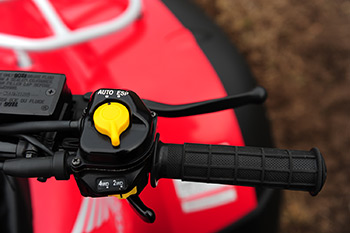
According to the Motorcycle Safety Foundation riding under the influence dramatically impairs a rider’s ability to operate a motorized vehicle – especially affecting vision and judgment.

How many times have you seen someone having a beer or a couple drinks before hitting the trail with friends on an ATV or SxS? Its pretty likely that the group he’s riding with has probably had a few themselves too.

Its likely their riding skills have been affected as a result and maybe they’re weaving all over the trail with disregard for oncoming riders, like you and your kids.

Lets imagine for a second that on this ride there’s an accident. Someone veered off-trail and hit a tree hard or worse, hit an oncoming family of riders. Someone gets seriously injured or worse yet, someone dies.

I have to wonder whether people who choose to ride impaired would recognize where the problem started in this scenario and there’s a slim chance they’ve ever considered this outcome.

I honestly have to wonder whether this entire group of riders would even learn from a tragedy like this and continue to endanger themselves and others around them.

Operating an ATV or side-x-side while under the influence of drugs or alcohol is just plain stupid and we take a zero tolerance approach to it.

If you’ve already had a few, think about how your actions could affect someone you care about and leave it parked for the day.

If someone you’re planning to ride with is under the influence, take a stand because the person he hurts could be you or me.