Home Blog Page 149

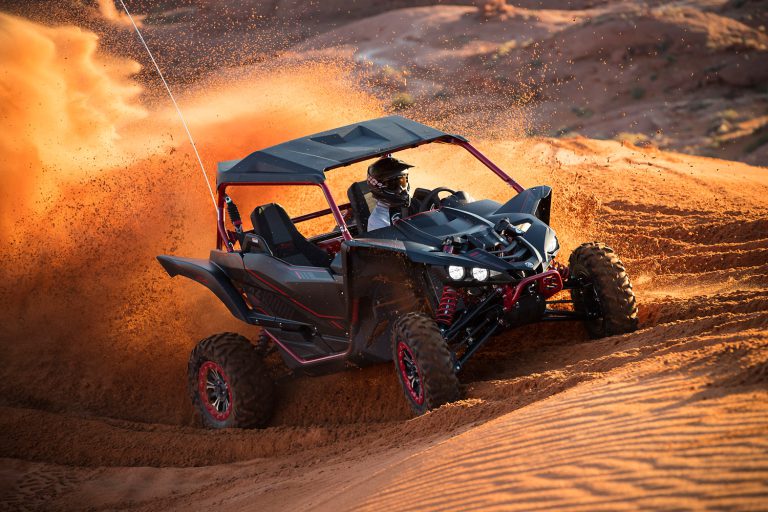
2017 YAMAHA YXZ1000R SS

0

We asked Dirt Trax Television’s Luke Lester some interview-style questions about Yamaha’s latest version of the YXZ that only he could answer in his inimitable way. Luke doesn’t pull any punches and tells it pretty much the way it is so read on and learn what he thinks of Yamaha’s 2017 YXZ 1000R SS with paddle shifters and an automatic clutch.

Dirt Trax: What were your first thoughts when you rode the original YXZ 1000? Did it surprise you?

Luke: The original YXZ surprised me in a big way for a number of reasons. First was the motor: That 3-cylinder engine is just a beast and it really set me back on my heels.

Second was obviously the transmission. I had no idea what to expect before I drove it… but I hoped it was going to feel like driving a high performance rally car – and it does.

Finally, there was the chassis. It’s a very under-appreciated aspect of the YXZ, but it handles and rides fantastic.

Dirt Trax: Now that we’ve had about a year to evaluate the YXZ with manual shifting, what are your biggest pluses and minuses about that version?

Luke: The manual shift YXZ is really a conundrum for me. I love the manual transmission. I love that it requires the driver to pay so much more attention and forces so much more involvement in all aspects of the driving experience.

There really is nothing quite like holding a YXZ wide open to the rev limiter and powershifting through all five gears. However, driving in slow or tight situations is, lets just say, not ideal or appealing to me.

Dirt Trax: How does the new SS compare from the driver’s seat? Is it for everyone?

Luke: This is an interesting question because I don’t think there is such a thing as a SxS for everyone. Every SxS has its perfect owner. The original YXZ’s perfect owner was definitely someone who spent most, if not all their time in wide, open spaces like dunes or desert terrain. But the Sport Shift system really opens up the YXZ to a different type of user.

I can say in all honesty, the paddle shift system on the SS makes it easy and pleasant to drive anywhere, whether it’s the dunes, fast trails, tight trails or even mud and rocks.

You still have to want to shift manually, because you’re still required to manually select the gear, but not having to massage that clutch pedal all the time makes the SS a way more pleasant vehicle for a much wider range of situations.

Dirt Trax: When you’re driving it, are there any specific times the original version is better than the SS or vice versa?

Luke: If you’re out in the open, where things are fast, the original may not be “better” in terms of actual performance, but it is still more fun. You can’t get around the fact that having a fully manual clutch gives you a whole different level of control over how the power gets to the ground.

Other than that, though, Yamaha was very careful to incorporate features and technology that would ensure there are no actual performance advantages or disadvantages between the standard and SS YXZ models. Launch control is a great example.

With this system you can “drop the clutch” from a dead stop, just like with the manual version.

Dirt Trax: If you could have a wish list, what would you like to change about the 1000 SS?

Luke: There’s not much I’d change about the SS. Obviously, with the latest announcements from some of the other OEMs in the pure sport segment, a bit more horsepower would be a welcome addition.

The only other thing I can think of is a bit of a personal preference but I think it’s an interesting thought. I actually would have preferred to shift the SS with the drive selector lever instead of the paddles.

The drive selector on the SS is in the same position and feels the same as the shift lever on the standard version. On the SS it’s only responsible for selecting forward, neutral and reverse. All the actual gear selecting is done with the paddle shifters.

It felt more natural to me to reach for the drive selector when I wanted to change gears. I got used to the paddles and they certainly do work great, but I still found myself reaching for that selector lever from time to time.

Dirt Trax: Given we’re seeing some changes in the industry with the recent intro of a more powerful RZR Turbo and the introduction of Can-Am’s new Maverick X3, how do you think the SS matches up?

Luke: This goes back to the one thing I’d change about the SS… or YXZ in general, if I could. Before Can-Am and Polaris raised the horsepower bar with the new RZR HO and X3, the YXZ actually held its own against the 131 and 144-hp turbos thanks to its ultra-efficient, gear on gear transmission.

Since it has no slippage, it transfers a way higher percentage of the engine’s power directly to the back wheels than a CVT system can. But there’s just no way 110-hp, even through a manual transmission, is going to have a hope of keeping up to 154 and 168 horsepower vehicles no matter what kind of transmission they have.

Dirt Trax: Do you see the competition responding to the 1000 SS with anything similar?

Luke: I think it would be very interesting to see another manufacturer come with a manual or Sport Shift-style transmission in a SxS. However, at this point, I don’t see it being a realistic expectation.

The YXZ and YXZ SS are satisfying the buyers who want and appreciate a manual transmission. However, at this point we haven’t heard the masses screaming for manual transmissions in other vehicles.

Time will tell, but right now I think its pretty clear: Yamaha has this corner of the market well covered and they’ve done it in typical Yamaha style: Innovative, functional and durable.
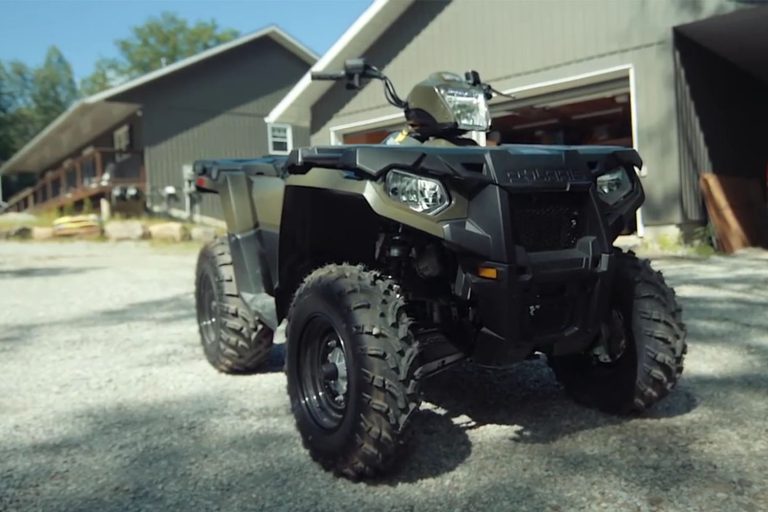
TEST RIDE: Polaris Sportsman 450 H.O. EPS

0

AJ evaluates the 2016 Polaris Sportsman 450 H.O. EPS.

Subscribe to our YouTube Channel!

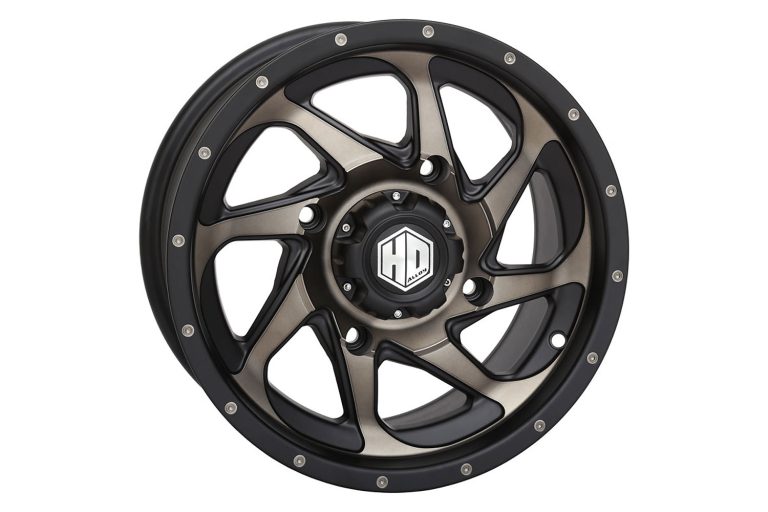
Introducing The All-New HD8 Wheels

0

STI Tire & Wheel designs and manufactures tires, wheels and tubes for owners of off-road motorcycles, UTVs and ATVs.

Launched in 2010, STI is lead by powersports industry veterans with a deep understanding of the needs of off-road enthusiasts.

The company is focused on delivering excellent products backed by industry-leading customer service.

STI Tire & Wheel designs and manufactures tires, wheels and tubes for owners of off-road motorcycles, UTVs and ATVs. Launched in 2010, STI is lead by powersports industry veterans with a deep understanding of the needs of off-road enthusiasts. The company is focused on delivering excellent products backed by industry-leading customer service.

stitireandwheel.com

TEST RIDE: Defender Max XT HD10

0

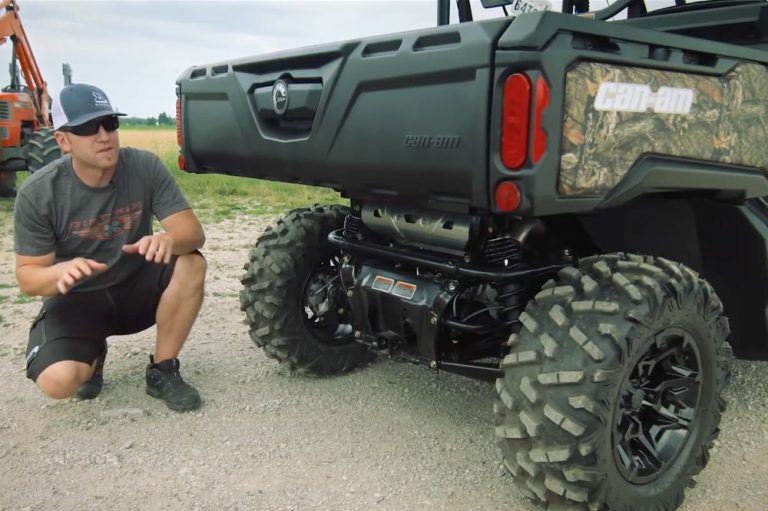
AJ’s getting the job done aboard our 6-passenger Can-Am Defender MAX XT HD10.

Subscribe to our YouTube Channel!

SPORTSMAN HIGH LIFTER 1000

0

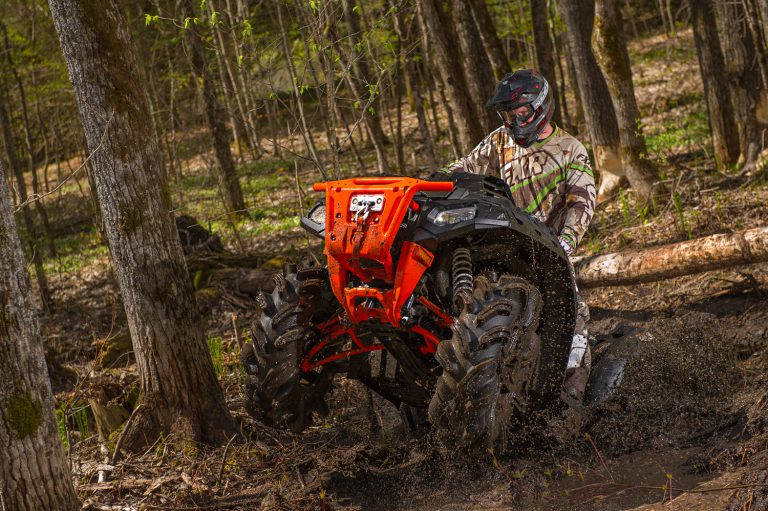
Far more than a production ATV with big, aggressive mud tires and a snorkel, the High Lifter 1000 has been engineered to excel in any kind of condition the mud genre can throw at it.

Its dual balance shaft 1000cc SOHC parallel twin makes 85-hp, which is down from what this engine’s potential is in other vehicles (up to 110-hp in some). Not to worry, the High Lifter version makes enormous amounts of torque at reasonable RPM and that’s exactly the formula you’ll need when all four wheels are spinning in heavy mud.

The High Lifter’s CVT is calibrated so the gear ratios of both high and low range are closer together. This means the high range setting is lower while low range remains close to the same as it is in a normal ATV.

Polaris dubs this a “close-ratio” CVT, but the point is, when you enter a mud hole and haven’t downshifted into low range, you can usually take advantage of 100-percent of the engine’s power without stopping to engage low.

Polaris has made a big effort to guarantee the engine won’t be taxed with excessive heat because of caked mud accumulating on the cases and rad fins.

Two big inverted fans sit where the front rack is and blow down on the rad to keep the airflow going. The intake snorkels are mounted at handlebar height and the vent lines are up high so the engine can keep running in the deepest of the deep.

Appearance-wise, the Hi-Lifter has a stunning presence. There’s a massive front bumper that looks totally military and houses the 3,500-lb winch along with tow hooks that ensure you can hook onto your buddy’s ATV when you need to.

Here’s a unique addition: A grab strap on the top of the handlebar that lets you leverage the High Lifter when you’ve got both feet on one side’s running board negotiating an off-camber or when you’re pinched tight against something in a mud bog. Nice touch.

The combination of stiffer springs and massive wheels and tires makes the High Lifter sit up tall like an NBA center. It looks so tall we’re thinking you might have trouble getting enough oxygen to breathe at that altitude.

The 29.5 outside diameter Outlaw II meats have moon-crater sized lugs and quite frankly, if you’re spinning these tires and making no progress, you better check underneath to see if you’re high-centered. The wheels are classy-looking aluminum ones but they’ll usually be dirty anyway, right?

Another unique feature that goes way beyond appearance is the arched A-arms on the High Lifter’s front and rear suspensions. Their upward curve hugs close to the vertical axis of the wheels and guarantees you’ll have less chance of getting hung up because an underwater branch is tangled in a front or back wishbone.

It really adds to the total ground clearance effectiveness of the 1000 and lets obstacles slip past without risking undercarriage damage. There’s 13.5-inches of clearance but it looks and operates like there’s much more.

The 1000 also comes with electrically assisted power steering – a nice thing when the bars are being ripped from your grip riding invisible gnarl. It also gives the High Lifter a lighter feel at the handlebars when you’re turning those huge front donuts loaded down with sticky mud.

Polaris has really rung the bell with the High Lifter 1000. This ATV is targeted top to bottom for the most rabid mud enthusiast and its total design is a statement that Polaris intends to dominate this somewhat unique but high profile segment.

Maybe the market targeting of a mud-specific ATV of this caliber will take the spotlight off SxS sales in the off-road market for a while. Maybe.

TEST RIDE: Polaris Slingshot SL LE

0

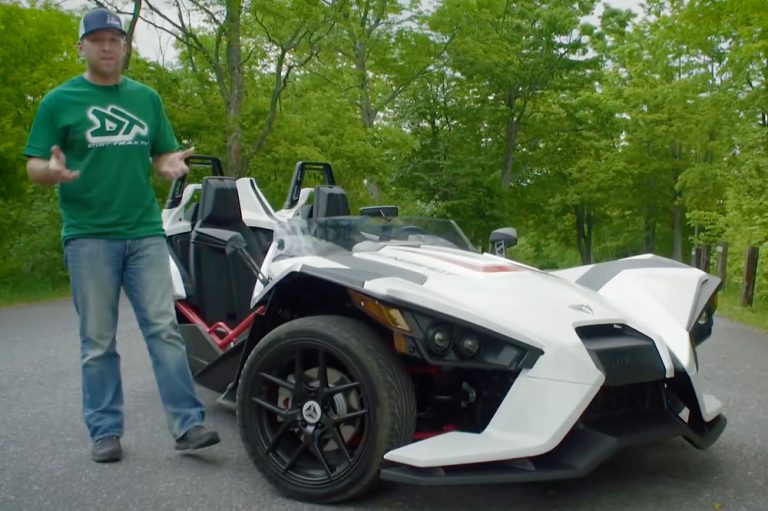
Dirt Trax Television Co-Host AJ Lester gets behind the wheel of the exciting and ultra-cool looking Polaris Slingshot.

Subscribe to our YouTube Channel!

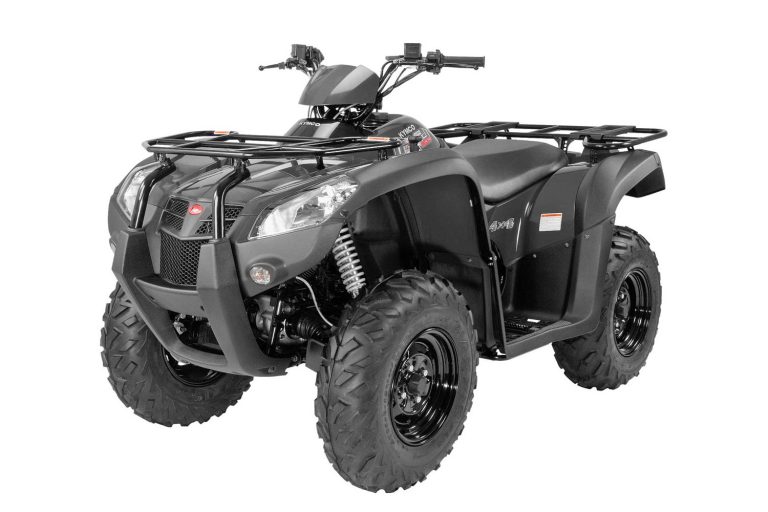
KYMCO MXU 500i

0

Kymco has been importing ATVs to North America for more than 15 years now and has established a good dealer base and a growing and positive reputation with enthusiasts.

The company’s ATV line-up is very comprehensive and offers sport-utility models from 700ccs down to kid’s models. There’s also an extensive list of Kymco semi-sport ATVs like the Mongoose and Maxxer that attract a fair share of attention.

The bread-and-butter of the Kymco line-up is the MXU 500i. This ATV seems to hit the sweet spot with shoppers looking for a multi-purpose wheeler – work, trail riding, fishing, hunting – and Kymco has always offered consumers a bit more when it comes to value versus price.

The MXU 500i formula begins with a 36-hp 499cc DOHC single with EFI driving through a CVT tranny and a full-featured, selectable 4WD system, including diff-lock.

This is the starting point and is the basis for an overall package that includes 4-wheel independent A-arms and disc brakes up front with a single disc on the rear driveshaft.

Although the 500i doesn’t own a lot of Kymco-specific innovation (these features are all offered by various competitors) it does offer all of the above on a value priced model with nothing held back.

The first time we test rode a 500i we suspected it might be merely a conglomeration of the most popular features available on any ATV consolidated into one model. We were partially correct but what we overlooked was the fact the 500i is a wholly integrated package that competes strongly in its function with anything else in its class.

Kymco did a restyle job on its MXU line a couple of years back and the bodywork turns heads and surprises doubters with its classy appearance.

The new body changes actually went far deeper as Kymco beefed up the chassis at the same time to offer more strength and rigidity.

Even since its earliest days on these shores this company has excelled at covering the details with its products and fit and finish is very impressive.

It’s also worth noting Kymco has been a supplier to Arctic Cat for nearly a decade and its engines, used in several Cat models, have proven to be durable, innovative and reliable.

The 500i spec’s out very competitively with 10.4 inches of ground clearance and decent suspension travel. Rack capacities and towing figures all fall into the same range as the competition. You’re getting steel wheels instead of aluminum but that’s pretty much the standard for the ATVs in this article.

There’s a growing acceptance of Kymco as one of the universal players in the industry and the company’s favor has been earned with consistent quality and fair pricing. It might be time to take a serious look.

WILDCAT TRAIL VS. WILDCAT SPORT

0

Dear Motorhead:

I am thinking about getting out of ATV and into Side x Side. I have an Arctic Cat TRV700 for my young son and I, but I’m looking for something exciting for the spring!

I enjoy my dealer, heck of lad, good service, good character, but he does not have any 2016 or 2015 side x sides and all dealers around the country are seemingly not wanting to release their old stock to other dealers. 2017’s no issue. I had my heart set on a Wildcat Sport Limited as I am a pretty broad shoulder and fella with long legs.

Now I know you and AJ are slim Jims but Luke looks like he can take down a wild bore at 80 miles an hour and so my question is, I can source a 2017 Trail limited but I am not sure if I will be dissatisfied with settling for smaller unit.

The extra width is something good but the trails do not come with the wider A arms and the fancy shock package and it seems the RZR is not giving as good of spring rebates so I don’t think I can reach on a RZR S900 cost.

Now to the question, sorry lads, would you be happy with a Trail or would you go for a Sport and would you go as far as Guelph or Montreal to buy one from a dealer you don’t know in order to get the 2016 left or would you even settle to get a 2015 trail which is what they are discounting the most, alas to forget about the Sport which is what I really want… Hmm, your tutelage please and thanks.

Fred

Hey Fred –

Thanks for the message and for trusting us with this important piece of advice. I’ll give you my thoughts in a bit of a point form format to keep things as clear as possible.

– All Trail and Sport models have the same driver cabin so the Trail isn’t any smaller inside than the Sport. The only difference between these 2 vehicles, as you pointed out, is the A-arms and the shocks. If you fit in one you’ll fit in the other just fine and I can tell you, I fit, along side a fully grown camera man, just fine in a Wildcat Sport or Trail.

– The extra width of the sport IS definitely a huge bonus and adds to the stability of the vehicle. If it were me buying one, id be buying a sport. The only time id look at a 50 inch wide sport SXS would be if I had a specific reason or need for the 50 inch width. Sounds to me like you dont NEED this SXS to be 50 inches wide so my suggestion is to find a Sport if you can. The upgraded shocks are worth it on their own. But the width is going to make the whole vehicle more fun on the trails.

– I applaud you for wanting to stick to your local dealer with whom you’ve developed a good relationship. That’s such a HUGE part of the ownership experience, you’re doing the right thing. However, if he can’t get you the model your looking for, perhaps it would be worth talking to him about it and letting him know that your loyalties are with his dealership (or hers… no discrimination) and no matter where you buy your vehicle from you’ll be bringing it to his dealership for service and to purchase accessories, but that you may have to buy elsewhere to get what you want. I would think a good dealer would understand this completely and see the bigger, long term picture. Showing up with a new SXS you didn’t buy from him could ruffle some feathers, so talk to him first.

-You seem like the kind of guy who wants to hold onto a SXS for a while before upgrading again. So, if you have to drive a decent distance to get the exact vehicle your looking for, do it. One long day of driving will be well worth 4 or 5 years worth of enjoyment from the vehicle you want. But saving a day in the car and getting a vehicle that wasn’t EXACTLY what you want… that’s not worth 4 or 5 years of buyer’s remorse. I ride motorcycles and have done this MANY times. Drive up to 4 or 5 hours to get what I wanted and once I had it home, the drive seemed trivial because I was so happy with my new bike.

– Lastly, the price. As I understand it, you can get both a 2016 Trail limited and sport limited for a good deal but the best deal is on a 2015 trail? If so, and this goes back to my last point, get the sport. If it costs a bit more, divide the difference over the # of years you plan to keep it. I think you’ll find that it wont add up to more than a few hundred a year… or maybe $20 a month max. Then ask yourself, would I be happy to spend an extra $20 every month I ride this vehicle to have the exact one I want. Or would I be happier knowing I have an extra $20 in my jeans each month? If you’d be happy to spend the extra and get what you want… do it. If you’d be happier to save the extra, don’t.

IMO, buying big boy toys like these is all a matter of balancing what you won’t regret spending with what you won’t regret buying. There’s nothing worse than coming home with a shiny new vehicle only to regret paying for it every month and there’s also nothing worse (they are equal) to coming home with a vehicle you compromised on only to wish you had something different. I’m confident you’ll find that perfect middle ground.

Hope that helped and thanks for watching.

Luke Lester

RJ ANDERSON WINS IN RZR TURBO

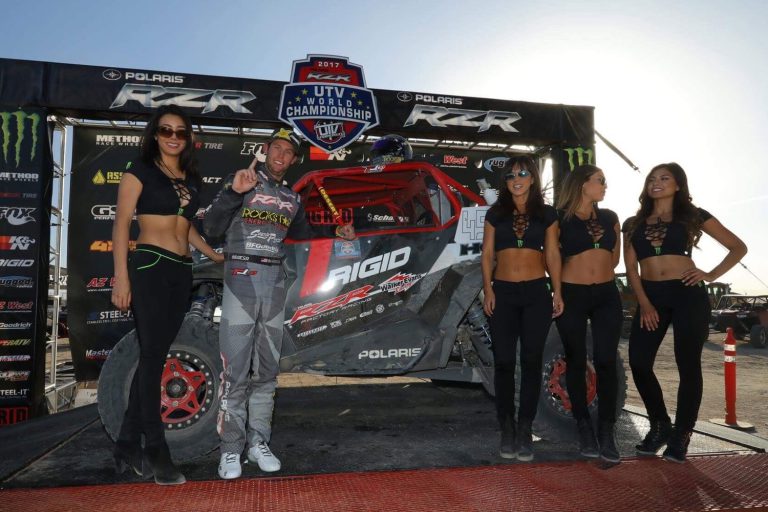
Polaris RZRs had a great showing at the Polaris RZR UTV World Championship powered by Monster Energy in Laughlin, Nev. this past weekend. RZRs took seven of nine podiums, excluding the Unlimited class.

RZR XP Turbos swept the Short Course Production Turbo class with Team RZR’s RJ Anderson taking the championship. Ryan Holz finished second and Team RZR’s Branden Sims took third. RZR XP Turbos also finished on the podium in the Desert Race with Team RZR’s Justin Lambert finishing second and Mark Holz taking third.

The youth races saw an increase in entries with more than 50 total entrants, up from 24 last year. Youth racers took to the track in the RZR 170 EFI and the new ACE 150 EFI for some fun racing. In the Youth 250, Dallas Gonzalez took the win and in the Youth 170 race, Luke Knupp topped the podium.

With more than 300 total entries, up from 212 last year, the Polaris RZR UTV World Championship powered by Monster Energy continues to be the biggest UTV race in the world. As a sponsor since its inaugural race, Polaris RZR has been one of the biggest supporters both on and off the track. Of the more than 300 entries, approximately 70 percent were RZRs and for the second year-in-a-row, the company offered vehicles as the grand prize to each race winner.

“Polaris RZR is ecstatic with the success of the UTV World Championship,” said Matt Boone, Polaris RZR Marketing Manager. “The sponsorship and vehicle giveaways are our way to thank racers for their dedication to our sport. We look forward to continuing to be part of such a successful event.”

Polaris Industries Inc. (NYSE: PII) is a global powersports leader that has been fueling the passion of riders, workers and outdoor enthusiasts for more than 60 years. With annual 2016 sales of $4.5 billion, Polaris’ innovative, high-quality product line-up includes the RANGER, RZR and Polaris GENERAL side-by-side off-road vehicles; the Sportsman and Polaris ACE all-terrain off-road vehicles; Indian Motorcycle® midsize and heavyweight motorcycles; Slingshot® moto-roadsters; and Polaris RMK, INDY, Switchback and RUSH snowmobiles. Polaris enhances the riding experience with parts, garments and accessories, along with a growing aftermarket portfolio, including Transamerican Auto Parts. Polaris’ presence in adjacent markets globally include military and commercial off-road vehicles, quadricycles, and electric vehicles. Proudly headquartered in Minnesota, Polaris serves more than 100 countries across the globe.

Visit polaris.com for more information.

CFMOTO OFFROAD LINEUP

0

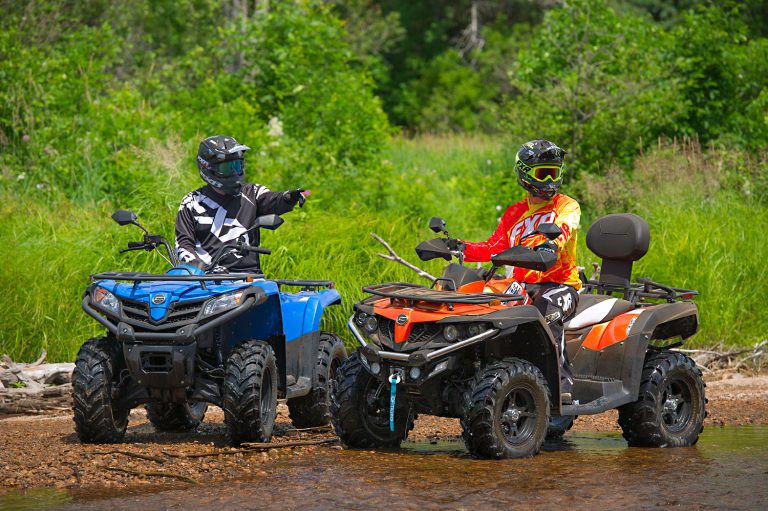
We get a closer look at CFMOTO as the company aims to be recognized industry-wide for its quality offroad vehicles.

Subscribe to our YouTube Channel!