Home Blog Page 150

2017 PROWLER 700 XT EPS

0

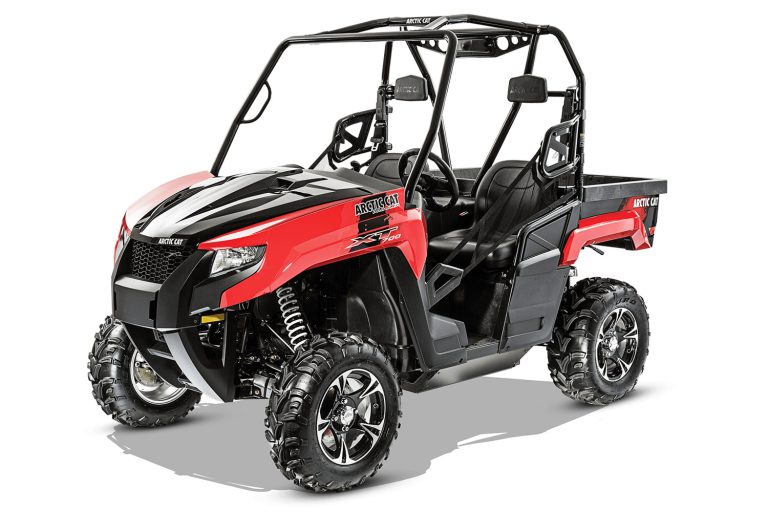
The recent changes to the Prowler donÂ’t necessarily mark a significant zag in the companyÂ’s strategy for getting the attention of utility off-road customers.

Perhaps its biggest flaw is the fact it doesnÂ’t generate rushes of adrenaline or flabbergast customers with a long menu of new and unique mechanical and electronic innovations. It is what it is: A utility-targeted vehicle with enough handling, lightness and agility to be called a semi-sport UTV.

Interestingly, Arctic CatÂ’s heaviest hitting Prowler is the upscale 700 HDX. ItÂ’s size and passenger capacity, plus its unique fold-down cargo bed, make it CatÂ’s most popular choice with utility-minded buyers.

However, CatÂ’s management team were well aware the 700 XT, when compared to other competitors like the Polaris Ranger, Yamaha Viking or John DeereÂ’s Gator XUV 825i, although faring well in direct comparisons, was losing some of its showroom sizzle.

CatÂ’s solution was to revamp the ProwlerÂ’s appearance, moving away from the Jeep look-a-like front grill and angular fenders it had relied on for years to a more organic-style appearance with flame-based styling cues for the hood, grille, side panels and new halogen+LED headlights resulting in a softer, certainly more modern look that will turn some heads out on the trail.

Prowlers are available with three different engines: A DOHC 695cc single (the one weÂ’re focusing on here), a 500cc single and a top-of-the-line 1000 V-twin Cat has been offering for several years.

The EFI 700 has had an incredible reputation for reliability and produces enough torque to uproot an Egyptian pyramid. Although not a particularly smooth engine, its tractor-like bottom end is all but legendary in the off-road biz and this engine can chug down low in its powerband when youÂ’re climbing near-verticals or negotiating sticky mud in your fave quagmire.

Married to CatÂ’s hallmark CVT tranny and fully featured 4WD system (electric selectable, with locking diff), thereÂ’s formidable capacity for taking on all types of off-road challenges.

Arctic Cat has long felt ground clearance is one of the key attributes any off-road vehicle needs to be able to excel in gnarly terrain and the Prowler has plenty… ten inches of it and ten inches of front and rear suspension travel.

Over the years, when daring ourselves in some of our most regularly-used mud holes, weÂ’ve discovered we can keep a Prowler in 2WD longer without switching to 4×4 simply because it wonÂ’t hang itself up as easily as some other vehicles.

Torque and ground clearance are major factors here and once you eventually engage fully locked 4WD, those standard-issue Duro Kadens bite hard and propel you to dry ground with nary a gasp.

Our press unit rode fairly harsh and we think it has everything to do with spring and shock calibration and not the design or geometry of the front and rear ends. Maybe the suspension engineering team felt the Prowler needed to be set up so it wouldnÂ’t bottom when loaded to the max. Dunno.

When youÂ’re unloaded or partially loaded, both the front and rear are pretty stiff and it makes the chassis buck fore to aft when youÂ’re riding over roller-type bumps instead of just sucking the suspension down and eating them.

WeÂ’d love to see some shock adjustability on the XT, especially so you could dumb down the compression damping those times youÂ’re not hauling your wifeÂ’s cement elephant collection out back.

By the way, the fully composite tilting bed has 600-lbs of capacity and the tailgate works perfectly every time. ItÂ’ s easy to flush out and even looks nice.

ThereÂ’s also a really nice 3-cubic foot storage area up front where the hinged hood is located and, believe us, it comes in very handy when youÂ’re out on the trail for long periods and need a dry place to keep your sandwich.

Cab legroom is adequate and all switchgear, although not stunning, works well and gets the job done. We especially like CatÂ’s hip protection and shoulder support and since there are no doors on the XT, it gives the driver and passenger a much more secure and confident feeling when riding off-camber or broad-sliding at higher speeds.

Power steering is standard on the XT and this system works very predictably and consistently with excellent feel and sensitivity.

This version of the Prowler is a workmanlike vehicle that will deliver years of reliable service. If, first and foremost, thatÂ’s what youÂ’re looking for, youÂ’ll be extremely happy with it.

ITP Cryptid Mud Tire Install

0

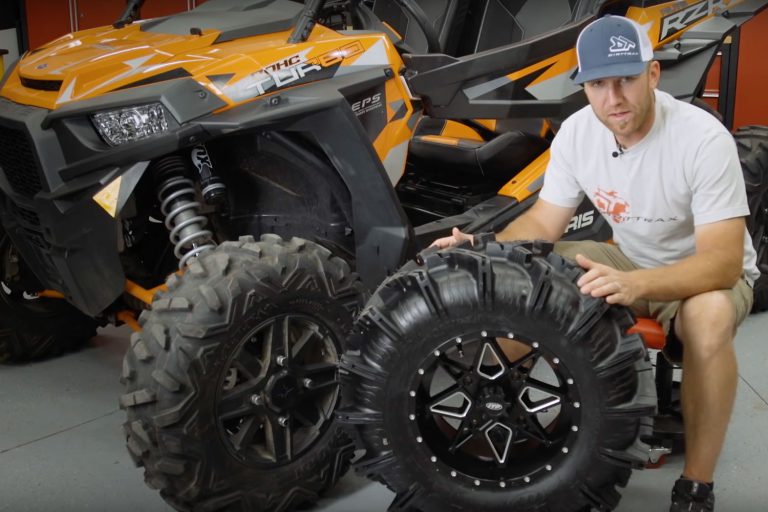
AJ makes our RZR mud-ready with a new set of ITP Cryptid mud tires featuring an aggressive graduated lug height wrapped around ultra-slick looking Storm Series Tornado wheels.

Subscribe to our YouTube Channel!

2017 CAN-AM OUTLANDER 450

0

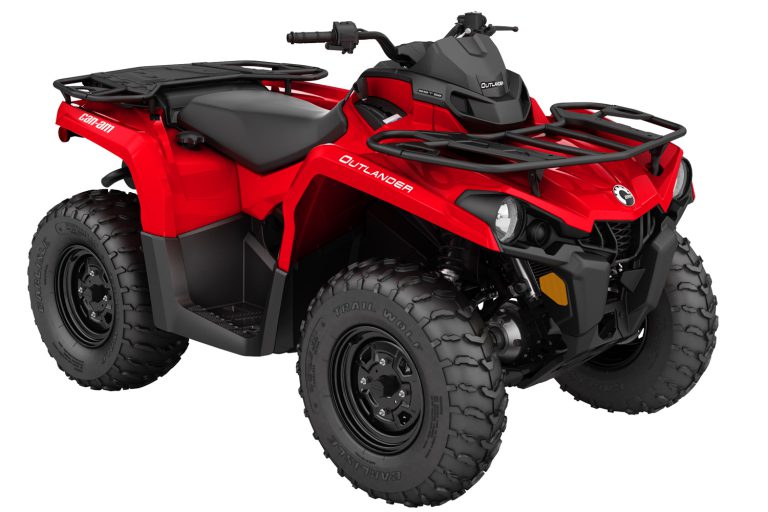
When it comes to ATVs, Can-Am puts a mother lode of focus on its V-twin Outlander models, the 570, 800, 1000 and in earlier years, the 650 and 500. Standing quietly in the shadows and not getting much attention was the 400 (now a 450).

Truth is, the 450 is an extremely attractive 4-wheeling buy and for more than just a couple of reasons.

The latest 450 is much lighter than any of the V-twin Outlanders and that translates into nimble handling and genuine agility in rough trail situations.

For instance, the weight difference between the 570 and the 450 is only 26-lbs but it feels like way more.

Probably a combination of the 450Â’s strong torque curve and the way the lighter single cylinder engine is placed in the chassis is what makes it feel lighter at the handlebars and less cumbersome in the bumps.

Incidentally, the 450 and the 570 share exactly the same chassis platform so youÂ’re getting the same double A-arms up front and Can-AmÂ’s exclusive torsional (TTI) trailing arm setup at the rear. With standard issue juice shocks, this combo offers an excellent ride.

A few years ago Can-Am began offering tube steel racks on its baseline models and we were immediately impressed with how lean the Can-Am bodywork looked with the change. There are plenty of attachment points and the racks are just as functional as ever.

Back to the driveline, specifically the engine: This recently punched-out to 427ccs SOHC EFI single makes great power down low and revs out cleanly to trail speeds. At 38-hp thereÂ’s plenty of power for lugging and carrying, too.

One feature we love is the Visco-Lok self-locking differential up front. Although thereÂ’s selectable 2-4WD, you donÂ’t have to worry about finding another switch or lever to lock the diff.

Just keep it rolling in 4×4 and when you hit a mud hole, the diff senses wheel speed and a viscous coupling automatically locks you in. A great feature, and one thatÂ’s worth a few bucks against the competition when youÂ’re checking the value meter.

HereÂ’s some other things we like: A nice digital gauge, not too big and not too small – just with everything you need to know.

Also, a 5.4-gallon fuel tank: With this gas-miserly engine, you should have enough fuel to tow your friendsÂ’ ATVs back home when they run out. Lots of travel and ground clearance: 9-inches up front and 8.8 at the rear and GC is a healthy 10.5-inches.

The 450 represents the latest chassis technology from Can-Am and a very good engine-driveline package to enhance it.

Downsizing to a single, youÂ’re not giving up much and may just fall in love with this ATV.

RZR 4 900 Customization

0

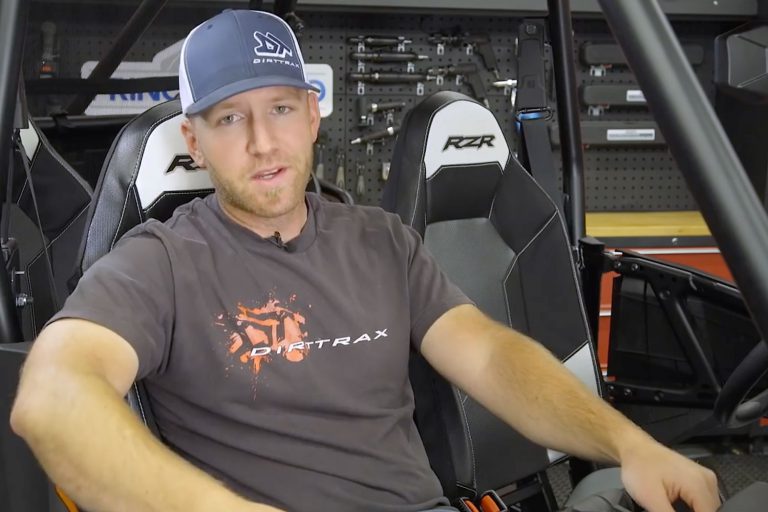
Dirt Trax Television Co-Host AJ Lester is in the TRAIL TECH shop adding a few more affordable accessories to our Polaris RZR 900 4-seater.

Subscribe to our YouTube Channel!

HONDA RANCHER 420 DCT IRS

0

Honda holds an industry dominating reputation for quality and reliability.

If you doubt it, just check the comments on every single social media post made about the companyÂ’s products. Honda owners wear their red undies proudly and hold onto their ATVs forever because they keep on keepin’ on, ride after ride, after ride.

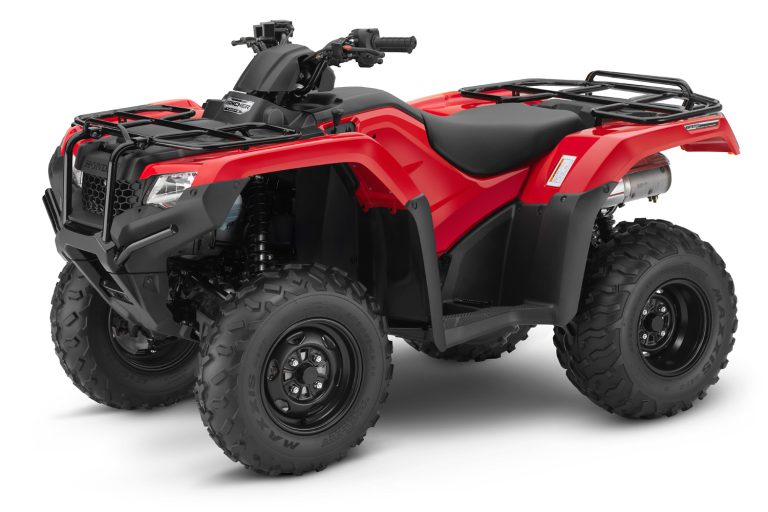
Honda’s Rancher 420 (called the Rancher TRX 420 in Canada), in its electrically assisted power steering (EPS) equipped version, got a new look in 2015 receiving updated bodywork similar to the Foreman Rubicon. This deluxe version of the Rancher also features independent rear suspension, an updated and easier-to-use reverse lever as well as Honda’s Dual Clutch Transmission, the company’s response to the industry-standard CVT.

As equipped, this EPS Rancher represents a fairly healthy investment of $7,299 (USD) but its 420cc Honda pushrod single is as tough as an anvil and comes with throttle body EFI.

On first observation it kinda made us cringe at the idea of forking over that much coin for a relatively small displacement ATV that doesn’t deliver as much juice as some of its competitors in that price range, particularly the Kodiak 700.

However, although we tend to be blinded by horsepower numbers, we have to keep in mind that, like its namesake, ranchers and farmers put build quality and long life expectancy at the top of their wish lists.

Realistically, in many minds, the daily abuse an ATV will get put through on a farm or ranch over years of use trumps raw horsepower.

We’re not making excuses for Honda here but it isn’t just about the beating your Rancher can take and still purr at the end of the day. Comfort and ride quality are Honda staples with plush suspension, a comfortable seating position afforded by the ample leg and foot room because of its tranverse mounted engine, and incredibly good handling.

These are features Honda has absolutely gotten right and it shows in the dominant sales numbers this vehicle’s name has maintained for more than a decade.

When you stack up overall price against features and benefits, is the Rancher 420 our first choice? Maybe not. However, if you want an ATV that’ll faithfully meet your expectations long after its time, we think Honda’s Rancher 420 can deliver.

GREG BIFFLE 275 HORSEPOWER WILDCAT

0

A little while ago we worked on this amazing project which was documented on Dirt Trax Television in which we worked directly with NASCARÂ’s Greg Biffle and his company PACE OFFROAD to drop a 177 horsepower 1056cc turbocharged and intercooled parallel twin snowmobile engine into the chassis of an Arctic Cat Wildcat as well as adding a long list of aftermarket parts and accessories to turn this into the ultimate rig. YouÂ’ve asked along the way for a full parts list so here it is.

Subscribe to our YouTube Channel!

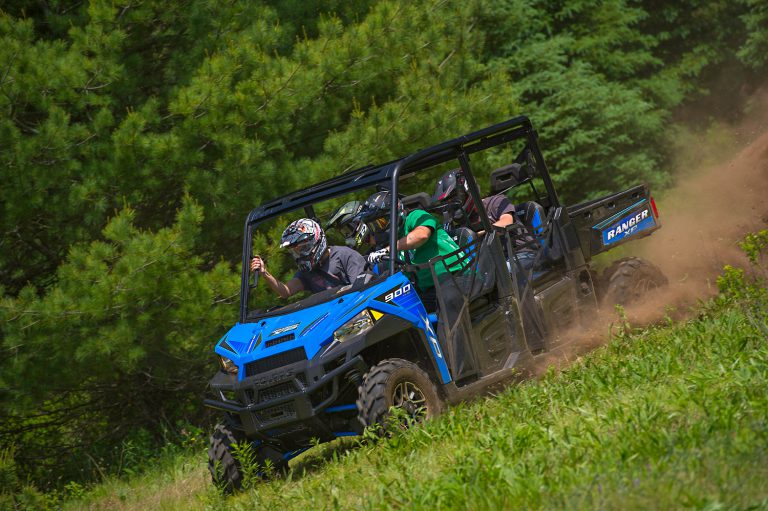
RANGER CREW XP 900-6 EPS

0

Whether or not this huge Ranger win a debate about SxS performance is a point of debate itself.

Certainly, those Polaris customers who are looking for pure performance – at least defined in the way most people think of it – would be better served with the purchase of a General or an RZR. We think performance has a skewed definition when it comes to this stretched-out Ranger.

First of all, its 900cc engine is completely under-stressed at 67-hp. We know for a fact other versions of this DOHC parallel twin can make north of 80-hp, so why the downslope? It’s probably about durability and torque curve.

Horsepower isn’t always the best indicator of how much lugging, pulling, hauling a vehicle can pull off. For instance, load this Ranger up with gear in the bed, invite six people to take a seat and torque is your best friend. Consider the fact this Polaris is governed to top out at 50-mph and you begin to understand why a high-revving, high output, screamer engine just isnÂ’t ideal for the market the Ranger 900-6 is aimed at.

Performance can also be categorized into suspension and handling. Although the Ranger doesn’t turn-in with the acumen of an RZR, it does have a very reasonable turning circle for a vehicle its length and can negotiate corners under power with enough elan to evoke bursts of adrenaline.

Whether it’s loaded with cargo (human or otherwise) or not, the Ranger delivers an excellent ride. This range of ride compliance is a black art and one that frankly, impresses us. With 10-inches of travel front and rear, there’s ample room for shock movement and for the dampers to absorb medium and low speed jolts at considerable velocity.

The truth is, you’re not going to be railing this vehicle fully loaded with over 1000-lbs of cargo on hideously rough terrain with the rev-limiter tapped-out anyway. What you may be doing is taking two or three people for a joyride on some gnarly stretches and using all the shocks can offer. This spring-shock combo is certainly up-to-the-task and the combo of a mile-long wheelbase and good shock calibration delivers surprisingly decent plushness.

Other facets of performance in this category include cab ergonomics and ease of utility use. The Ranger 6 features an easy loading, tilting cargo bed with a smooth operating tailgate. Seating is roomy – especially for four riders – and not so real-world roomy with six. Our suggestion is limiting full passenger tickets to four adults and two kids maximum or just making sure your 6-adult crew are included on short enough rides they’re still speaking to one another at the end of the day. There are six seat belts included, though.

In the cab there’s good legroom and entry-exit is very easy with the upright positioning of the seats. We hate the nanny-government legislators who’ve made the manufacturers put throttle restrictors in place when you don’t have the seatbelts coupled and the mesh doors clamped.

Obviously this is another case of an OEM being put in a position where it has to toe the line or face the possibility of huge liability problems. For this reason and a few others, we’d prefer real hinged doors – but then the price would climb skyward and for what you’re getting here, the cost-value equation is pretty good, as is.

The last and maybe most important aspect of performance in this category is 4-wheel drive. Ease-of-operation and quick response to terrain is absolutely vital when you’re stressing a big vehicle like the 900-6. There’s nothing new with the On-Demand Polaris setup here – except it also features a Versa-Trac turf-mode, unlocking differential.

The same 4×4 system is used on all Polaris off-road vehicles and uses a mechanical Hilliard setup to sense the need to engage or lock 4WD. On-Demand enables you to drive the Ranger in all-wheel all the time, switch over to 2WD or permanently lock into 4-wheel. You’re the boss and everything can be engaged on-the-fly. Frankly, there’s no better 4WD system on the market – maybe with the exception of certain John Deere SxSs.

So performance is a relative thing when it comes to utility. Sure, there’s plenty of power on tap with the Ranger 900 but it’s all the other aspects of performance we’ve noted here that make it such an ideal vehicle. It’s a near-perfect fit for its category and Polaris sells a ton of these things. No surprises there!

RZR 4 900 Customization – PART 1

0

AJ takes a break from doing over-the-top extreme builds and shows you a few simple and very cool gadgets you can easily add to your side-x-side.

Subscribe to our YouTube Channel!

CFMOTO CFORCE 500

0

CFMOTO’s calling card has always been about offering you more features than the competition for a price that’s very close or even less than theirs.

What with so many ATV manufacturers using off-shore resources today to build parts and components that “appear” to be built in North America, the price gap has been closing as the more established builders try to hold the line on pricing and compete with the Asian OEMs.

Ultimately, the winner is the consumer, who is saving dollars and getting the same or more bang for the buck.

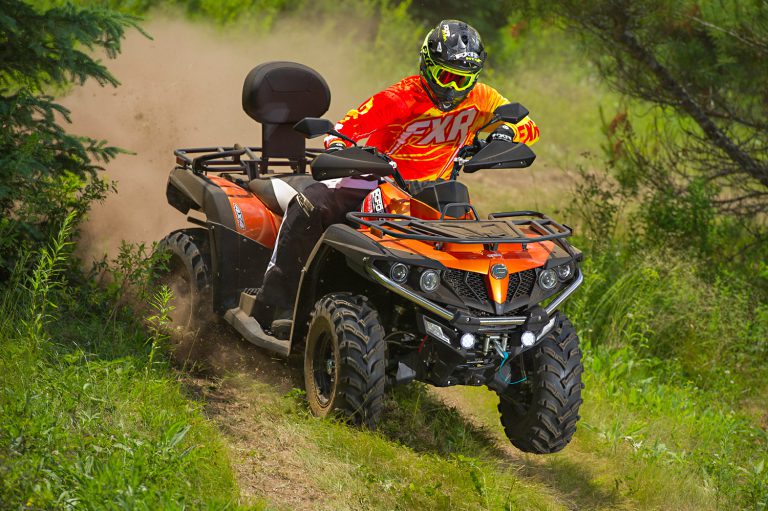
One of CFMOTO’s best value offerings is the CForce 500. Not only is it loaded with goodies like double A-arm independent suspension, selectable 4×4 with diff-lock and nice looking aluminum wheels, but it’s powered by a potent 493cc 4-valve single with EFI .

Perhaps the most obvious feature you won’t find on any other model in this review is its extended wheelbase that offers 2-up seating with a backrest for the rear passenger – no extra charge.

Some would argue 2-place accommodation isn’t what they’re necessarily looking for but it sure is nice to have that possibility when youÂ’re buying a new ATV – and the extra length pays big dividends in the mud.

Other goodies include full-featured digital instrumentation, a 5-gallon fuel tank and a 2-inch receiver out back. Get this: There’s even a 2500-lb winch out front included in the price.

This is a sick list of stuff and if you want to spend a few hundred bucks more, you can upgrade to power steering on the CForce 500HO EPS.

On that model the HO means the engine has been significantly amped upwards in power to exceed the former CForce 600 it replaces. Obviously, we feel the “base” version is still very strong competition for any of the other ATVs in this comparison.

None of this would hold much weight if the company didn’t back its product and dealers were unhappy carrying the CFMoto name. Not the case. The dealers we’ve spoken to have a ton of confidence in CFMOTO’s parts and dealer support and see a bright future for the company.

We’ve ridden the CForce 500 and continue to be impressed with its quality of finish and the way its controls and systems operate. We haven’t determined any quirky behavior in its 4WD, handling, ride or braking and on the whole, the vehicle feels like a very together piece of equipment.

JOHN DEERE GATOR XUV 590i

0

John Deere has proven its commitment to the SxS business by delivering some very effective recreational off-road machinery the last few years.

The company’s high-end line-up is especially interesting and after extensive testing of at least two models, the RSX 860i and the XUV 825i, has really wowed us.

John Deere designs and builds its own chassis platforms but uses engines from an assortment of sources.

In its top performance series, Piaggio supplies the sporty RSX 860i’s V-twin and Chery supplies the velvet smooth inline triple for the utility-targeted XUV 825i.

Incidentally, that same triple is used in KawasakiÂ’s latest Mule, the Pro FX, and itÂ’s one of the nicest engines weÂ’ve ever plied in a SxS.

When it comes to chassis details, John Deere really goes the extra mile to ensure its customers will have a positive long-term ownership experience.

Each of these vehicles are tightly engineered and in some cases built like battleships to guarantee reliability and durability.

It’s not merely presumed by the product development people that John Deere vehicles will be subjected to some severe abuse; it’s fully expected.

Thus, a company that builds half-million-dollar farm equipment and some of the world’s most reputed construction vehicles applies the same formula to its rec stuff.

The truth is, though, JD side-by-sides are much, much more than indus- trial. The RSX 860i is a genuine contender against semi-sport vehicles like the Polaris General and the Can-Am Commander.

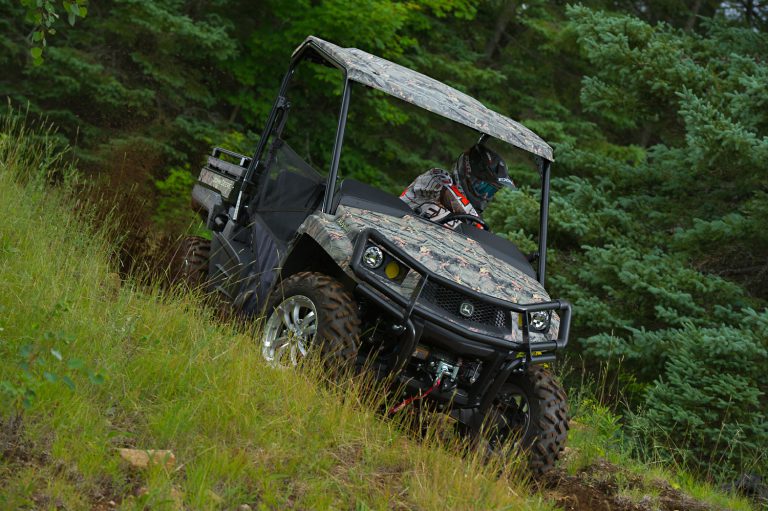
Having had plenty of exposure to the Polaris Ranger and the Arctic Cat Prowler, we were abso-lutely stunned by the driving experience we had with JDÂ’s XUV 825i and found ourselves magnetically drawn to it in the presence of those other two.

So, the new XUV 590’s bloodlines are very good. It looks for-all-the-world like a milder version of the RSX and appears to share many of its body panels.

The 586cc Cheri-built inline twin delivers 32-horsepower at 5600 rpm – a fairly high power curve but we’ve been impressed with how John Deere focuses on torque curves over power curves so its vehicles can tow and haul with maximum efficiency.

The EFI-equipped 590 delivers on this count and the engine feels strong on the trails and handles loads very competently.

Since JD has targeted the 590 at a different audience than either the XUV 825i or the RSX, there are some downgrades. For instance, the 590 uses nets instead of doors and doesn’t have the premium bed rails and deluxe seating of the RSX. Naturally, the wheels are not as flashy either. However, a very good double A-arm suspension with pre-load adjustable hydraulic shocks at all four wheels delivers an excellent ride.

You can order the 590 with aluminum wheels and EPS if you wish but as usual, it puts it in a different price category.

We’ve come to respect JD’s 4-wheel drive systems on all its vehicles. The 590 offers selectable 2-4WD using a mechanical lever located on the dash and a third position that locks the differential.

Traction is good and the system gives very positive results without fuss. It’s here we’d suggest moving up to the premium tire and wheel package if youÂ’re doing a lot of mud running, but truthfully, the baseline tires are completely adequate for about 80-percent of the terrain you’ll encounter off-road and dare we say, better than most base tires offered by the competition.

John Deere’s dealer network is the envy of every other manufacturer and the number of dealers displaying the JD shingle worldwide probably exceeds or meets auto companies like Toyota, GM and Ford.

If we could be critical of one thing it’s John Deere’s obeyance to governing their SxSs to speeds that are too conservative. The 590 sits at 45-mph and we all know it’s simply about product liability avoidance.

Truth is, that speed limitation is probably adequate for the highest percentage of users but dang it, sometimes you just want to tear it up a bit!

WeÂ’d love to see the corporate legal eagles back off a bit but you know how that goes these days.

Yes, the 590i is a bit more expensive than some of its same-class competitors but if you compare it feature-for-feature, in most cases your getting more for your buck.

We think it’s an extremely good vehicle and completely worthy of close examination by shoppers in the medium performance class.