Home Blog Page 165

WORCS Round 6 Polaris Results

Eighteen RZR XP Turbo EPS units entered the SxS Pro Unlimited Class at WORCS Round 6, Sand Hollow, Utah.

Cody Bradbury would take the checkered flag with Polaris Factory Racers RJ Anderson and Ryan Piplic taking second and third. Piplic still leads the series points for the class.

In the east, GNCC’s Big Buck, in Union, SC would see Team UXC’s Kevin Trantham on his No. 209 Scrambler XP 1000 take a second and Michael Swift on his No. 202 Scrambler XP 1000 take third. Trantham still leads in class points with Swift in third for the year.

In the Single Seat classes, 10 Polaris ACE vehicles would line up. Polaris Factory Racers Sam Yokley and Jesi Stracham would hit the podium with Yokley taking first overall and Stracham third. Robert Boyton would take second.

WORCS Round 7 in Mequite, Nev. will be May 6-8. The next GNCC race is the CST Camp Coker Bullet, in Society Hill, SC, on April 30 and will have ATV, UTV and Single Seat racing.

ALL-NEW KIMPEX WEBSITE

0

Kimpex prepares to celebrate its 50th year in the industry. Half a century of daily implication, sharing knowledge and most of all, living with the passion of powersports. This passion is lived by more than 200 employees following the rhythm of a continuously shifting industry.

At times where new technologies are more and more present in everyone’s daily consumption habits, Kimpex is convinced that its industry must find new ways to integrate new methods.

With the objective to have a better communication bond with the powersports enthusiasts and help them live their passion to the fullest, Kimpex continues its web overhaul.

The Drummondville based company regrouped its dealers and suppliers with the intent to offer an innovative solution to consumers.

Kimpex now made it possible to buy online directly from the dealers, through Visit kimpex.com.

“The Kimpex.com platform is: The strength of a distributor which offers more than 50 000 powersports parts and accessories, who’s able to ship within 24 hours. All this combined with the strength of a huge network of hundreds of dealers to support you. And this is now available at your fingertips by smartphones, tablets and computers on Kimpex.com” Team Visit kimpex.com

At the end of the day, the objective of Kimpex is to create a synergy with their dealers to accompany the consumers throughout their whole buying process, to optimize the experience.

Completing the new website platform, consumers can stay up to date on the latest powersports news, events and trends with the KimpexNews.com blog, not to mention the multiple social media pages available from Kimpex.

Kimpex is the Canadian leader in the distribution of parts and accessories intended for powersports, with its two distribution centres and over 50,000 available products. Based in Drummondville, Quebec, the company has a network of more than 3000 retailers in Canada and the United States. Kimpex has some 50 years’ experience in the distribution of the most prestigious brands in the industry. Kimpex is the distributor of choice in Canada.

Visit kimpex.com

2016 YAMAHA GRIZZLY 700 EPS

0

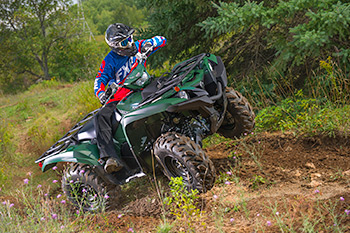
DirtTrax has had a love affair with Yamaha’s Grizzly since the latenineties. The company has continued to evolve its biggest sport-ute ATV, stirring-in more power then adding independent rear suspension in the early part of the 2000s.

Progress continued with even more power, then electronic fuel injection, then electrically assisted power steering in 2007. Over the next near-decade Yamaha has made minor tweaks here and there on the Grizzly 700 but perhaps none greater than we’ve seen in model year 2016.

Since the Yamaha 2016 ATV media introduction last summer, DirtTrax has been able to put some quality saddle time on the latest version of the Grizzly. Here’s a look at some of those improvements and we’ll tell you what we think after some riding time with this newly improved Yamaha.

The 2016 Grizzly’s DOHC single has been upgraded to 708ccs. Mapping changes to this 4-valve, EFI dynamo of an engine and a revision of its CVT transmission have increased overall power and response by 6-percent. Torque alone (always one of the Grizzly’s strong points) is up 9-percent. The new 708cc mill’s air intake system has been completely re-vamped providing much better air flow into the cylinder. Drivetrain calibration uses slightly lower gearing and lighter primary clutch flyweights maximize the twin cam’s love of RPM.

Although the power difference is not enough to stretch your arms another inch or two, what we did notice more than anything is a vast improvement in torque. The difference now is the pop is right there immediately when you gun the throttle and it makes trail riding so much fun when you find opportunities to loft the front wheels over obstacles.

If you’ve spent time on the former 700, you’ll definitely notice an improvement in top end speed but in our opinion, it’s the Grizzly’s low to mid range torque that really gets the adrenaline flowing.

One of the things we’ve always loved about the Grizzly is its lightweight feel at the handlebars and its quick, precise handling and ability to carve sharp esses at speed. Some of our test riders under 6-feet-tall tell us it fits like a glove, which translates into confident riding in gnarly conditions.

Although Yamaha has made a few subtle design changes like a slightly taller stance and longer seat, we were pleased the new version still provides the same confidence-inspiring ride. Yamaha has gone to its proven wide-arc A-arm setup for better ground clearance plus a little more front suspension stroke and although we’ve always been satisfied with ground clearance and suspension on the prior Grizzly, the subtle improvements this year have helped provide easier escape over trail junk and an overall plusher ride.

Besides the all-new chassis, the 2016 Grizzly has redesigned front and rear fenders and a new handlebar mounted headlight.

Yamaha was first into production with electronic power steering and the engineers continue to do a stellar job with it. The terrain where we do most of our testing is very rocky and the trails are tight and winding. Yamaha’s EPS nearly completely eliminates handlebar whip resulting in less fatigue and no trace of arm pump. You can order your new Grizzly without EPS but you’ll hate yourself for doing it.

The Grizzly continues to be one of our fave sport utility ATVs of all time and the 2016 model only makes us respect it more, however, our crew had mixed feelings on the twin-piston four-wheel disc brakes.

Some of our riders felt there was still room for improvement but all agreed the brakes on the Grizzly have come a long way over the years. Some of our testers also prefer a single lever braking system over separate front and rear levers. It’s strictly a matter of preference and a constant source of disagreement in our garage.

There were times we found the gear lever to be a little finicky as well. As it turned out, it was mostly driver error causing the problem. As long as you use the rear foot brake when shifting into park, reverse etc., the gear shifter works like a charm.

The rear tool storage box behind the seat could use a better locking mechanism. We found out the hard way this is not the best place to carry extra water bottles. If things get bouncing around in there, the box will pop open. We’re pretty sure Yamaha knows about this and is finding a solution.

Last, the new storage container built into the front seat cockpit area is quite roomy but it gets toasty warm in there. We were considering wrapping marshmallows and chocolate in foil to see if we could make S’mores. It’s a good spot to carry gloves on a cold day but perhaps not the best for keeping drinks cool on a warm day.

The Grizzly is one of the most steadfast and enduring brands in the ATV biz. Its reputation has been built on light overall weight, nimble handling and a bulletproof engine and driveline. This newest version has shunned change for the sake of change and instead has opted for refinement.

The newest Grizzly works better because it’s still a Grizzly, not a completely new set of blueprints. Get our drift?

2016 KAWASAKI TERYX AT HATFIELD MCCOY

0

During the holidays we received an invite to join Kawasaki in mid-January to try out the 2016 Kawasaki Teryx in the mountains of West Virginia. It’s always great getting a chance to ride the Hatfield McCoy Trails, but we were a bit worried when we started seeing the news about Winter Storm, Jonas.

Just three days before our ride, the storm dumped about 18 inches of snow on southern West Virginia but Kawasaki reassured us the adventure was on and we were up for the challenge.

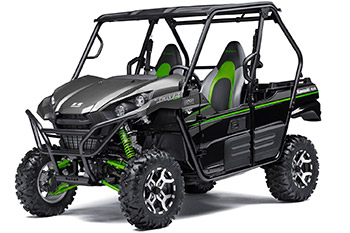
The trip started with a Kawasaki Product Manager, Kevin Mann, giving a detailed walk-around of the 2016 Teryx and Teryx4. The Teryx platform is a mix of both sport and utility and the 4-seater Teryx4 is an ideal vehicle for family adventuring.

The first thing we noticed was the new aggressive styling of the front end, including four LED headlights on the LE and Camo models that offer regular and high beam and are controlled by two separate switches.

Access to the hood has changed from front hinge to an easily removable panel. In the cockpit, there are even more changes as Kawasaki added tilt steering and an over-molded steering wheel. The front seat is now easily adjustable into three positions without the need for any tools. Kawasaki also added a new dash with a carbon fiber-styled look that includes knockout places for accessory switches as well as an area specifically shaped for a Jenson radio and speakers.

Under the hood, Kawasaki has continued to use its muscular 783cc DOHC V-Twin paired with Kawasaki’s belt driven CVT. On this ride the CVT would definitely be put to the test, as engine braking was paramount on the slushy trails.

One of the most noticeable changes to the 2016 Teryx is new suspension calibration on the FOX Podium 2.0 shocks. While still offering eight inches of travel in the front and 8.3 inches in the rear, the new spring and damping settings offer a plusher ride and better control in rough terrain.

The two-seat Teryx still features two 24-gallon storage boxes that close from the top and these proved to be a great asset, keeping our gear out of the elements. The 600-lb cargo capacity tilt bed also features Kawasaki’s Quick Release (KQR) rails. The four-seat model has a smaller cargo area with 250-lbs of storage and features theater-style raised seating for the rear passengers.

Once the walk-around was finished we geared up, including thick gloves and a balaclava under our helmets and made our way to the trailhead. With expert drivers from the Hatfield McCoy Trails leading the way, we made a slow ascent up into the mountains on the Rockhouse Trail. This trail was aptly named as it seemed to be carved straight out of the hard rocky mountainside. On this trip the fresh snow covered the rocks so deeply we rarely noticed they were even there.

As we continued on our trek from Man, West Virginia to Gilbert, we gradually picked up the pace as everyone in the group became more accustomed to the conditions.

It was here the Teryx’s new suspension settings became really noticeable. The ride felt smoother than in the past and, at one of the photo stops, we made an adjustment on all four corners to make it a little stiffer. This adjustment worked out perfectly as we picked up speed in one of the valleys, cruising along in slushy snow at full throttle.

Just before the Gilbert trailhead there was a long downhill section where we shifted into low gear to see how well the engine braking would handle the icy conditions. We descended the icy trail without once touching the brake pedal.

We finished the 25-mile journey to Gilbert right around lunchtime and the rain started to fall while we were at the restaurant and then slowed considerably as we headed back to the trails. The rain added to the slush and also the fun as we were able to pick up the pace on the way back to Man. After 50 miles of trouble free riding in a winter wonderland our adventure was over.

Rather than creating a problem, the snow made the trip more memorable and gave us the unique opportunity to test the Teryx under a whole new set of circumstances. We’re glad for the weather and it underscored what a versatile SxS the Teryx is.

IS THE YAMAHA YXZ1000R BIG NEWS?

0

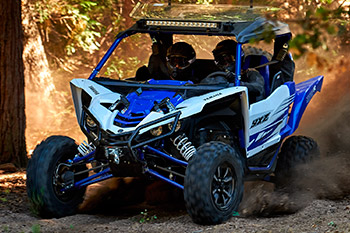
We had a chance to sit around the table with Dirt Trax Television’s Luke Lester to get his opinion of Yamaha’s YXZ1000R…

DTX: Yamaha has claimed the YXZ1000R is the first Pure Sport SxS? We find that a little confusing. What’s your take on this assertion?

Luke: I found that confusing at first, too. If the YXZ is the first pure sport, what is an RZR or Maverick or Wildcat? I think what Yamaha means is this is the first vehicle to be 100-percent focused on only the Sport-Performance segment.

Where the others advertise and build features into their Sport SxS line-ups to make them useable by a wider range of people, Yamaha built the YXZ to perform at its best only in high speed situations.

It is not a mud-runner, it’s not a rock-climber, it’s not really a trail vehicle – because it’s not supposed to be. The confusion I think comes from the word “Pure”. Yamaha is saying they are the first Pure Sport SxS… yet we, and others have been calling RZRs and Wildcats “Pure Sports” for a long time.

DTX: In your opinion is the YXZ a credible entry into the Pure Sport SxS market?

Luke: The YXZ1000R is absolutely a credible entry into the Pure Sport market. It is every bit as pure sport as anything else out there. It has no excuses to make. But it does have to come with a disclaimer. Is it credible? Yes. Is it versatile? Not as much as the others.

So, when you’re talking about the YXZ you have to talk about it in its element… where it was designed to be run, where Yamaha advertises and promotes it to be run.

DTX: What feature is most outstanding among its unique engine configuration, driveline and tranny differences?

Luke: Theres no question the most outstanding feature of the YXZ1000R is its transmission. It’s almost sad because the rest of the vehicle is equally as awesome. However, the transmission is so unique it overshadows all other aspects of the vehicle. The fun and excitement of pounding shifts off the 10,500-rpm redline isn’t something you can easily describe.

You have to do it to know why it’s so amazing. The rest of the vehicle is pretty impressive, too. Without that high revving 3-cylinder engine, the transmission wouldn’t be as fun to use. Without the expertly designed and tuned front and rear suspensions none of it would matter because you couldn’t drive it as fast as you wanted to.

DTX: The YXZ1000R, by Yamaha’s own admission, appears to be down on power when compared to two of its three main competitors. Your thoughts?

Luke: This is an interesting one. I strongly feel this vehicle should be compared to its non-turbo competition. Up against a Maverick XRS 1000, RZR XP1000 or a Wildcat X, the YXZ is more than competitive. In fact, it’s downright impressive. But add in that extra 30 to 40-hp midrange boost you get when you add a turbo and the YXZ can’t compete on engine power alone. This is not to say it can’t keep up.

With the engine being mechanically linked to the rear wheels, it results in a higher percentage of the engine’s horsepower getting to the ground. That’s something you can absolutely feel in the seat of your pants with the YXZ1000R. Even the turbocharged competition loses some of its super-impressive engine power to inefficiencies in the transmission.

DTX: It sounds like you really approve of the manual shift gear-on-gear YXZ tranny. Is it for everyone, everywhere?

Luke: Definitely not. In fact, it’s only “for” the right person in the right environment. After trail riding it, I can say for certain that, while it can be done, I wouldn’t want to do it all day. At least not when there are CVT equipped SxSs available.

Likewise, crawling over rocks or churning through the mud is not where the YXZ shines. It doesn’t do well in these areas because it isn’t meant to; so don’t expect it to. If you run out in the open, like on fast open trails, fire roads, dunes… anywhere you can really maintain speed and if you want a more involved and challenging driving experience, if you want to shift gears, the YXZ1000R has no equal.

It is more fun to drive because it takes more skill and forethought to really drive fast. It’s a driver’s vehicle for someone who wants an immersive driving experience – not for someone who wants to relax and be entertained.

DTX: You’ve ripped, shredded and jumped the YXZ more than anyone we know. What’s it compare like to the RZR, Maverick and Wildcat on an MX Track?

Luke: On a track the YXZ really takes a lot of focus to drive. You have to retrain yourself to remember to shift. You have to be really good at power-shifting without missing gears. Missing a gear at the last second leading up to a 70-foot double will not end well. It’s also interesting to think about cornering on a track with a manual shift vehicle. Cornering hard requires two hands on the wheel, but if you need to shift mid-corner you have to remove one hand.

It’s just so different and requires so much more focus. I was actually tired after an afternoon on our test track. With all that said, the suspension is incredible and can handle anything, absolutely anything you can throw at it: Track, trail, dunes…whatever.

DTX: Should Polaris, Can-Am and Arctic Cat be worried about the YXZ1000R and its paradigm shifting gear-on-gear tranny? Should they respond?

Luke: It was a few years ago we first made the suggestion to Polaris they should put a manual transmission in an RZR. The YXZ proves everything we assumed about the idea. It changes the riding experience so drastically you almost feel like you’re not driving the same class of vehicle. Should the others do it? They should wait to see how the public reacts and accepts the YXZ before making any big moves.

However, I think it’s something they need to seriously consider. Its fun and its exciting and it makes you want to keep riding. That’s a good combo.

Turbo RZR XP vs RZR 1000 S In The Dunes

0

Luke and AJ take off for an little fun and excitement in the sand dunes with two of the highest horsepower pure sport side-x-sides in our fleet – the 144 horsepower Polaris RZR Turbo and the 100 horsepower RZR 1000 S!

Subscribe to our YouTube Channel!

Trail Riding in Eastern Ontario Canada

0

Dirt Trax Television Co-Host Luke Lester is in Eastern Ontario Canada riding an excellent route from Bancroft to Tweed and exploring all the Eastern Ontario Trails Alliance has to offer.


Subscribe to our YouTube Channel!

TEST RIDE: 2016 Yamaha Grizzly EPS 700

0

Luke gets the chance to evaluate Yamaha’s completely overhauled 2016 Grizzly 700 EPS featuring a revised 708cc engine and power steering.


Subscribe to our YouTube Channel!

BRP INAUGURATES ITS THIRD MNFG FACILITY IN MEXICO

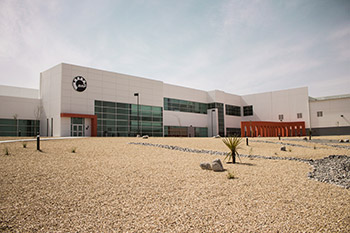
BRP inaugurates today its new manufacturing facility in Juárez, Mexico that provides the company with the capacity to meet its growth plans in the off-road industry.

“BRP is committed to introducing a new side-by-side model every six months over the next four years. This state-of-the-art facility, operated by a strong team of employees with excellent knowledge of our processes and values, will support us in meeting that objective,” said José Boisjoli, president and CEO. “The facility is central to achieving the growth, agility and Lean enterprise objectives of our strategic plan.”

The Can-Am Defender side-by-side vehicle, launched in September 2015, is assembled in this facility. This model is BRP’s entry into the utility segment, the largest and fastest-growing of the off-road industry, which represents an important growth vector for the company.

“I would like to highlight the collaboration and support of the governments of Juárez and Chihuahua, which were instrumental in the construction of this new facility,” said Sylvain Blanchette, vice-president of operations for Mexico and Canada. “BRP has always had excellent relations with local government in Juárez and we are very grateful to them for that.”

BRP now assembles vehicles and engines across three sites in Mexico. It is recognized as an employer of choice in Mexico thanks to its competitive wages, salaries and benefits. BRP has invested nearly 14,290 million Mexican pesos (CA$190M) in Mexico since it started operations here in 2001.

BRP (TSX:DOO) is a global leader in the design, development, manufacturing, distribution and marketing of powersports vehicles and propulsion systems. Its portfolio includes Ski-Doo and Lynx snowmobiles, Sea-Doo watercraft, Can-Am all-terrain and side-by-side vehicles, Can-Am Spyder roadsters, Evinrude and Rotax marine propulsion systems as well as Rotax engines for karts, motorcycles and recreational aircraft. BRP supports its line of products with a dedicated parts, accessories and clothing business. With annual sales of over CA$3.8 billion from over 100 countries, the Company employs approximately 7,900 people worldwide.

brp.com

TEST RIDE: 2016 Can-Am Maverick X rs Turbo

0

Luke evaluates Can-Am’s brand new turbo-powered 2016 Maverick X rs churning out 131-horsepower.


Subscribe to our YouTube Channel!