Home Blog Page 147

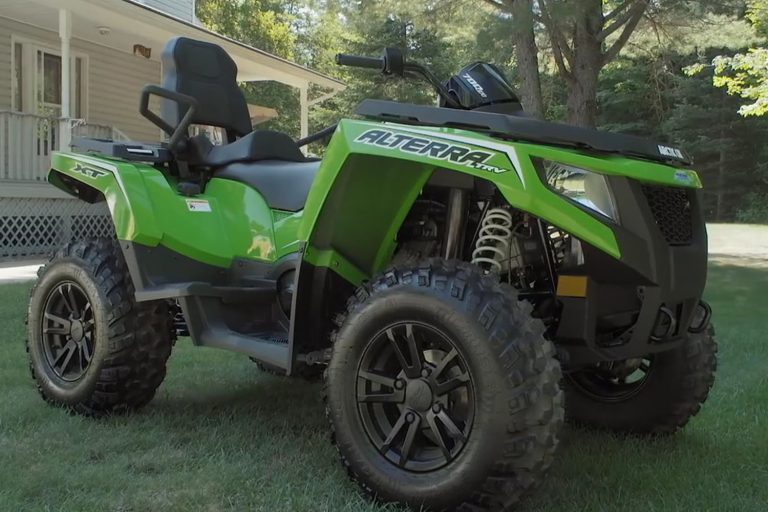
ARCTIC CAT ALTERRA 450

0

Ever since Arctic Cat did a restyle of its time-proven ATV chassis and renamed it “Alterra”, a herd of new eyes have been on the brand.

On the surface, you could argue the Alterra only received cosmetic improvements, however, you need to ride this 4-wheeler before you make a judgment on it.

Sure, the new styling is lighter looking and much more up-to-date than the bodywork of the past but, from the driver’s seat, the most obvious change is ergonomic. The seating position is inches lower than the former model and you can feel the difference in center of gravity when you’re cornering at speed or performing off-camber maneuvers.

The former Cat platform wasn’t exactly a willing handler and with improvements to the Alterra’s turning circle (now much tighter) and with general chassis balance amped-up, this wheeler is a lot more fun to ride.

Why a 450? In the ATV industry, there have been some very serious reality checks the last few years. More and more potential buyers are laying down cash for what they need versus what they want. This gutsy 433cc powerplant offers significant bottom end power for pulling and lugging and enough top end to deliver spirited performance on trail rides.

Certainly, the upshot is all about price. Cost aware buyers are looking for the most ATV for the best price and that’s what the Alterra 450 is aimed at.

Fact is, you can downsize to a 400 Alterra and save a few hundred smackers but you’ll be missing some pretty nice upgrades that come standard on the 450. Besides, the extra 50 or so cubes make a big difference in power delivery and add to this wheeler’s versatility. We think the 450 offers better value.

Here’s what the Alterra 450 brings to the table: Electronic Fuel Injection, 10-inches of ground clearance, fully shiftable 4WD, digital instrumentation and an upper class set of racks that are steel framed with molded plastic over them and great attachment points.

What are you giving up? Not much. In lieu of aluminum wheels, Cat is giving you powder coated steel ones. There’s no manual diff-lock but you do get nice Kenda Pathfinder tires and a 7-inches of suspension travel.

Other than the aforementioned compromises, the 450 is a fully equipped, all-purpose ride that competes very strongly against the rest of the market in this category.

BAD HABITS ARE KILLING US!

0

Why can’t we get this figured out in our industry? At a recent event myself and other media competitors attended, we were utterly amazed with the number of ATV and SxS drivers we encountered on the trails who are okay with drinking and riding.

Here at DirtTrax we understand the enjoyment of a cold beverage after a long, hard day’s ride; when we’re sitting by the campfire and telling stories of the mayhem that ensued. However, it seems this type of story is quickly being traded-in for the reality of drinking while riding and bringing along a cooler for trail beers.

I realize DirtTrax may polarize itself from some of its readers by stating our stance on this topic so plainly. However, at the end of the day, our industry, our sport needs to draw a line in the sand much like the snowmobile industry was forced to do in the 1990s and that line is absolute zero tolerance for alcohol and drugs when riding!

Events seem to go one way or hard the other, and I’ve attended examples of both where the venue organizers either call out drinking and put a total ban on alcohol or the other side that just doesn’t do anything. We need to face the reality (which is the longevity of our sport and the future existence of the big events we like to attend) if this kind of behavior keeps happening.

Each season there are a handful of events that truly set the benchmark for attendance, most of which do nothing about drinking and all of them result in deaths each year. Much like the general population, we have the 10-percent who make the 90-percent look bad.

Sometimes I wonder if those ratios aren’t much higher in our sport. Many times at events, I’m seeing those both wearing helmets and choosing to not drink and ride are the minority and that’s disturbing. As participants, do we really think we can maintain this lack of common sense? Do we think local and national government, enforcement and worst of all, anti off-road activists will let this go much longer?

To those who do drink and ride; I know you think your trailside beer isn’t hurting anyone – heck, you’re Ricky Bobby behind the wheel of your rig and your Yeti 110 is iced down with a slew of silver bullets. But lets be clear, you’re not in complete control when you have alcohol or drugs in your system and you can’t make the best and quickest decisions when put in a life or death situation.

While you may pass it off as “It’s my life and I’ll live how I want”, at the end of the day, although you didn’t kill yourself, you could have taken the life of a completely innocent rider trying to get out of your way. That’s precisely where the snowmobile industry was 25 years ago.

So what’s it take to stop this mayhem, to clean up the trails and to inspire promoters to enforce alcohol free riding? It takes all of us stepping up and setting an example, listening to that gut feeling you have when you read this, raising your voice and calling out people you see drinking and riding and maybe even choosing to not attend events that do not enforce a no-drinking and riding policy. You’ll find way more families at events like that, along with riders who are truly there to ride!

Sure, if you call promoters and riders out, you might get a few bad looks and maybe some folks who don’t want to ride with you anymore, but then again…do you really want to ride with them anyway?

This is our sport; lets take it back!

Yamaha Outdoor Access Initiative

Yamaha Motor Corp., USA, employees returned to the San Bernardino National Forest this past weekend to volunteer their time in support of projects aiding the fire-damaged OHV trails within the Trestles / Baldy Mesa OHV staging area.

Working with members of the Southern California Mountains Foundation (SCMF) and the U.S. Forest Service (USFS), the effort continued a nearly ten-year tradition of Yamaha Outdoor Access Initiative volunteer projects in one of the nation’s most frequently visited forests.

The popular Trestles / Baldy Mesa OHV staging area and surrounding trails have been closed since wildfires severely damaged the area last year. In an effort to help reopen recreational opportunities as soon as possible, more than 60 volunteers, including Yamaha employees, their friends and family members, contributed more than 300 hours of volunteer service. The day’s habitat rehabilitation and erosion mitigation project included planting 300 local florae, trenching several straw wattles, in addition to slashing and removing tracks on non-designated trails.

“We had another great volunteer project with our friends at the Southern California Mountains Foundation and U.S. Forest Service, and our volunteers did some great work to help improve the local off-road riding areas,” said Steve Nessl, Yamaha’s ATV/SxS group marketing manager. “Yamaha is dedicated to supporting sustainable access to public lands like the San Bernardino National Forest. And we don’t just say it – our employees, as well as their families and friends are investing their personal time and sweat to support this mission, because they believe it and live it.”

Yamaha volunteers have now participated in nine restoration projects over the last ten years within the San Bernardino National Forest. Past work includes projects in and around the Pinnacles, Cactus Flats, Big Pine Flats, and Coxey Meadows areas, planting more than 4,000 native seedlings and restoring and maintaining the OHV trails and trailheads.

“Yamaha Motor Corporation has been our partner for the past decade and has helped us accomplish numerous restoration projects on the San Bernardino National Forest. This project supports the development of new 50-inch trails in the Baldy Mesa area. Restoration and maintenance are a large part of what it takes to make these projects possible. Long term commitment to OHV land stewardship, education and safety through their Access Initiative program has helped us fulfill our mission of educating people to recreate responsibly,” said Stacy Gorin, executive director of the Southern California Mountains Foundation.

About the Yamaha Outdoor Access Initiative

The Yamaha Outdoor Access Initiative is the industry leader in guaranteeing responsible access to our nation’s land for outdoor enthusiasts. Through this program, Yamaha has directly and indirectly supported thousands of miles of motorized recreation trails, maintained and rehabilitated riding and hunting areas, improved staging areas, supplied agricultural organizations with essential OHV safety education, built bridges over fish-bearing streams and partnered with local outdoor enthusiast communities across the country to improve access to public lands. Each quarter, Yamaha accepts applications from nonprofit or tax-exempt organizations including OHV riding clubs and associations, national, state and local public land use agencies, outdoor enthusiast associations and land conservation groups with an interest in protecting, improving, expanding and/or maintaining access for safe, responsible and sustainable public use. A committee then reviews each application and awards grants to deserving projects. Examples of appropriate projects for grants include, but are not limited to:

• Trail development, restoration and maintenance
• Trail signage and map production
• Staging area construction, renovation and maintenance
• Land stewardship, safety and education

Updated guidelines, an application form and information on the Outdoor Access Initiative are available at www.YamahaOAI.com. For specific questions about the Outdoor Access Initiative, call Yamaha’s dedicated hotline at 1-877-OHV-TRAIL (877-648-8724), email OHVAccess@yamaha-motor.com or write to:

Yamaha Motor Corporation, USA, (YMUS), a leader in the motorsports market, makes the toughest, most capable and versatile ATV and Side-by-Side vehicles. The company’s ever-expanding product offerings also include motorcycles, outboard motors, personal watercraft, snowmobiles, boats, outdoor power equipment, accessories, apparel and much more. YMUS products are sold through a nationwide network of dealers in the United States. Headquartered in Cypress, Calif., since its incorporation in 1976, Yamaha also has facilities in Wisconsin and Georgia, as well as factory operations in Tennessee and Georgia.

For more information on Yamaha, visit YamahaMotorsports.com.

NEW DIRECTION FOR ARGO

0

The Argo has always come across a touch quirky, offering amazing amphibious mobility while delivering less than plush or high speed solid-terrain navigation. Until recently, Argo didn’t make excuses. In the past, if you wanted amphib operation, buyers willingly put up with a bumpy, relatively slow ride.

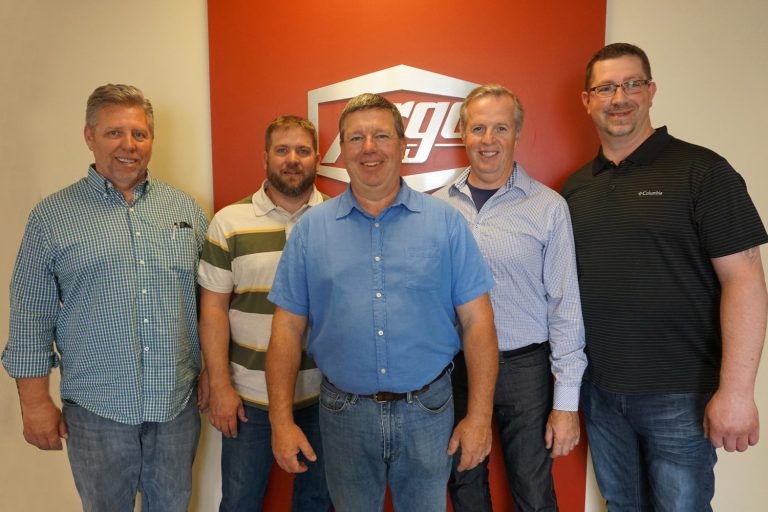
The amazing growth of the SxS marketplace has literally yanked Argo into the mainstream. The insightful team at Argo, led by snowmobile visionary and former Arctic Cat snowmobile boss, Brad Darling, has implemented changes intended to take Argo in a new direction. We think these changes are only the beginning of a re-invention of the Argo Amphibious XTV.

Recently, the braintrust at Argo asked itself (and customers) some tough questions and learned what the barriers are to selling more Argos in this SxS obsessed market. After assimilating the data, three items surfaced needing to be dealt with to bring the Argo closer to being a mainstream competitor. They are: Improved top speed, improved ride quality and handling, and improved entry and exit from the cockpit.

While the Argo is incredibly competent on extreme terrain, it is painfully slow when covering firm, smoother terrain and trails. The answer to this issue was pretty simple. Argo is owned by Ontario Drive and Gear (ODG), a sophisticated Canadian auto industry OEM drive component manufacturer.

ODG also builds the Argo’s transmission and drive system. ODG came up with an all-new gearbox knighted the “Admiral”. The Admiral comes in different versions catering to different use profiles for the Argo. The HS version (High Speed) allows Argos to run at speeds north of 30-mph (50-kmh). This is a big improvement in transport speed over former Argos.

The Admiral also brings a new and more mainstream level of steering control. The result is “Easy Steer”. An Admiral equipped Argo now responds to turning inputs in a completely predictable way. Steering response is no longer “notchy” but rather linear and proportional, inspiring confidence when running at the higher speeds the Admiral HS allows.

Ride quality was the next area needing improvement. The six or eight chevron-style, low pressure tires are the only protection you get from impacts. It’s interesting to note, if the patented Argo chevron tires are run with very little air, there is a marked improvement in ride quality and resultant rider comfort.

The bug-a-boo comes from the potential to spin the tires on the rims when running low inflation pressures. Argo has responded with optional cast aluminum beadlock rims that securely hold the tires in place on the sporty rims, even at exceptionally low inflation pressures. If this sounds like a too-simple fix, you would be correct. However, the proof is in the pudding and 2016 Argos equipped with bead locks deliver a vastly improved ride.

The former “basketball” ride produced by inflated Argo chevron meats is toned down by a large margin. While the ride could not be called plush and there are situations where the lower inflation pressure does not make a big difference, still, there’s an overall improvement in ride quality and vehicle control. Add in the recent move to thicker and softer seat cushions and Argo ride goes from calling the chiropractic hotline to tolerable.

The third issue holding Argo back from the mainstream is pretty obvious to anyone not familiar with the Argo entry-exit ritual. In a showroom environment, an Argo looks really cool. However, figuring out a way to get your wife and small children into it is not readily apparent.

Now, most Argo models now come with a standard entry-exit step on the driver’s side. An additional step on the passenger side is optional. The step is neatly positioned between the tires to line up with the driver’s compartment and makes getting in and out of the Argo far more convenient.

Correctly responding to customer expectations is basically marketing 1:01. In the past, Argo may have been a bit reluctant to deliver the performance, comfort and convenience improvements we’ve covered here. The Argo’s popularity tells us it is increasingly on SxS shoppers’ short list of vehicles to consider.

We haven’t said much about the Argo’s amphibious capability because no other SxS vehicle can compete with it there. What if, in the future, mainstream SxSs need to be amphibious to compete with Argo? It’s not rocket science. However, for Argo to legitimately compete in the mainstream SxS marketplace it must be able to perform in critical areas of comparison. That is precisely the direction Argo is moving in.

2016 YAMAHA KODIAK 700

0

When it comes to value, we think it’s about more than just about price. True value comes in the overall experience with the ATV you’ve opened your wallet for.

You need to ask yourself: What are my expectations for power, availability of service, reliability, ride quality? These are all important factors that will contribute to your user experience and justify your investment.

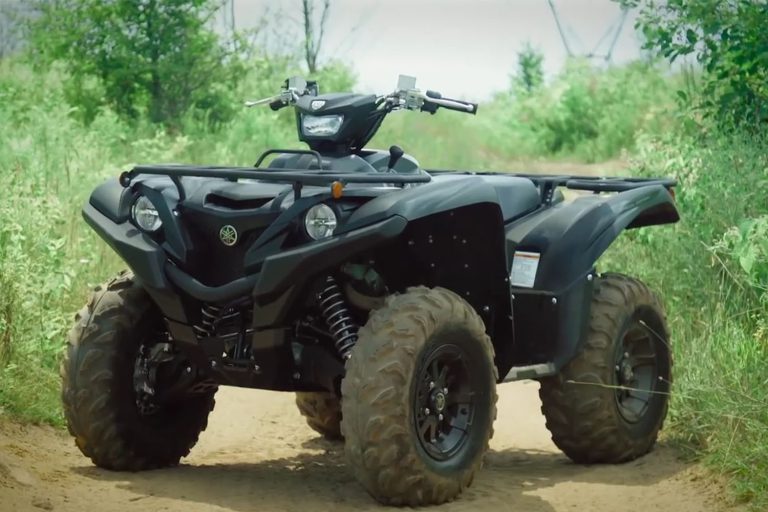
In 2016, Yamaha overhauled the Kodiak and upgraded to a 708cc single. Sound familiar? Yup, Yamaha is squeezing every dollar out of tooling for this mill as it is the same engine used in the Grizzly and Wolverine.

Truth is, though, this is a solid powerplant. It’s absolutely bulletproof and churns out a respectable 48-horsepower. At one time that kind of power was considered “Big Bore”.

The key difference with the Kodiak is its EFI fuel mapping and its clutching which uses slightly heavier 30-gram weights than the Grizzly to maximize the engine’s deep power curve, creating a lower engagement speed and more relaxed riding experience while still delivering bottom end grunt for towing and hauling. Instead of dual hydraulic brakes out back on the Grizzly, the Kodiak utilizes a multi-disc wet brake.

The base model Kodiak 700 is slim on extras. Because it has no standard-issue diff-lock, it uses a manual 4×4 lever. There’s zero instrumentation and no fuel gauge so you won’t know you’re empty until the fuel light goes on or you roll to a sputtering stop.

All these features are available by moving up trim levels, but then you’ll spend money close to what you’d lay down for a Grizzly. So where’s the value in that?

When it gets down to it, you’ll shell out a little more for a base model Kodiak than some of the other ATVs in category and on paper, when you check the feature menu, you might think you’re getting less.

What you end up with is a dead reliable, powerful engine and a vehicle capable of tackling even the toughest tasks you throw at it. You’ll get a class-leading ride with independent rear suspension and taut, precise handling, even without EPS.

If you’re willing to spend a little more up front to move into a brand with a stellar reputation for build quality, that few hundred extra bucks up front might hurt a bit at first, but the pain will subside when you discover you’ve got more than enough power to get your chores done.

Cheap out and you could suffer frustration just not being able to haul and tow like you want to or you could overtax your smaller-powered ride to the point you need to go in for service all the time, keeping you off the trail and wondering how much you actually saved.

BAJA ABOARD THE MAVERICK X3

Ensenada, Mexico is more than just the home of the Baja 1000, it’s the off-road motorsport capital of Mexico, where dirt riders of every shape and form are welcomed.

This is especially true of those businesses that plaster their décor with stickers from popular off-road brands along with posters and autographic shirts of legendary racers.

The start of our Baja journey aboard Can-Am’s all-new Maverick X3 began about 30 miles outside of Ensenada in the Wine Region of Santo Thomas. Within 10 miles of riding through the interior we crested over to the coastline and were then rolling alongside the Pacific.

It didn’t take long to cover distance because we were tempting the accelerator the whole time to see if we could eclipse the 87-mph governed speed. One thing was certain, if there was only one word to describe the engine development work of the Austrians at Rotax, it would be Wunderbar!

The 900 ACE Turbo was fully designed by Rotax and their key focus was to develop a wide and instantaneous powerband perfectly suited to desert and dunes, but also great for trails and fire roads. Its effectiveness lies in positioning the turbo as part of the exhaust manifold. This significantly reduces turbo lag and delivers instantaneous power delivery.

Can-Am claims acceleration of 0-60 mph in 4.9 seconds. Seat-of-the-pants feel, along with claw marks in the steering wheel from us digging our nails into it in an attempt to hold on, tells us they’re probably not far off the mark.

Transferring all this power to the wheels wouldn’t be nearly as effective without making serious improvements to the transmission. The QRS X transmission is a completely redesigned CVT with larger drive and driven pulleys. Engagement is smoother with a 6-roller drive clutch and a 3-roller driven along with a thicker and wider HD drivebelt.

Can-Am engineers also spent a considerable amount of time reducing the temperature inside the CVT chamber. By increasing the size of the intake and outtake located directly behind the driver’s head and by adding more fins on the driven they were able to reduce chamber temperature by 20-percent and also increase durability.

While we admit all this makes it a tad louder we’ll gladly trade not hearing everything our passenger has to say for increased performance and reliability.

Since the engine is positioned at the rear of the chassis, so is the CVT. Long gone are the days when you have to spend more than two hours ripping half the vehicle apart to change a belt. With a set of spare hands to remove the belt cover bolts you can now change a belt and be up and running in about 20 minutes.

2017 CAN-AM MAVERICK X3

0

Can-Am wanted to offer its customers a vehicle of unprecedented proportions along with something that would completely reinvent the experience. At bare minimum, the new Maverick would need to have 150-plus horsepower and the most suspension travel possible. The goal was to develop a SxS that would close in on the performance of a high-end trophy truck while still being affordable to the masses.

The three defining characteristics that became the guiding principals of the X3’s design were: 1) Powerful 2) Precise and 3) Defiant. While the focus was on the aggressive dune and desert rider, model variations would allow Can-Am to effectively create a halo effect and cover off the needs of the diehard racer, the adventure seeker and even spill over into the family sport rider segment.

The heart of the X3 platform is a pulse pounding 154-hp turbocharged and intercooled Rotax ACE inline triple mounted at the rear of the X3’s 102-inch wheelbase. It sits within an ultra light and rigid chassis made of an exotic steel called Dual-Phase 980, used in high end sports cars.

The fully jammed Maverick X3 Xrs comes equipped with a wide 72-inch stance, 24-inches of travel in the rear and 22 in the front. Fully adjustable FOX 3.0 Podium RC2 shocks with bypass technology, a roof and 30-inch tires mounted on aluminum beadlock wheels are other premium features.

The Xds sits at 64-inches wide, with 20-inches of suspension travel front and rear, fully adjustable FOX 2.5 Podium RC2 shocks and 29-inch Maxxis Bighorns mounted on aluminum beadlock wheels.

The base X3 stands impressively at the same width and suspension travel but is equipped with QS3 3-position compression adjustable FOX 2.5 Podium shocks and 28-inch diameter Bighorns on aluminum wheels.

The release of the Maverick X3 to the public during Can-Am’s dealer meeting in Orlando, Florida was met with high anticipation and praise. For some of us, the excitement was amplified knowing we were going to be given the opportunity to push the X3’s limits on an exclusive 250-mile ride in Mexico where we would cover the legendary Baja 1000 course over a 2-day ride.

Loads of power on tap means nothing without a suspension that can handle it. Previous iterations of torsional trailing arm suspension (TTA) simply didn’t cut it when it came to controlling bump steer as you powered through deep whoops and super rough trail conditions. The new 4-link TTX rear suspension is much closer to a trophy truck trailing arm design.

The three rearward links control camber effectively and toe-in is less than one degree through the full range of travel. The Fox 3.0 RC2 shocks devour rough sections of trail like a starving Survivor contestant plowing through a bucket of KFC.

We think the X3 has the most advanced driver ergonomics and technology ever integrated into a SxS. Can-Am leveraged a Ferrari supplier to design the seats. The design is a one-piece mold the engineers call Ergolock and the bolstered seat ensures perfect rigidity and maximum comfort.

The rally car-inspired seating position is also complemented with a D-shaped steering wheel with contoured hand-grips that help lock the driver in place. 1.5 turns of the wheel in either direction locks out the steering giving you a very responsive and tight turning radius, perfect for slaying twisty trails.

Fit and finish has always been a hallmark at Can-Am. Knowing full well that aftermarket companies have a lot of great stuff to offer, Can-Am invited a small group of companies into the heavily guarded X3 design room and gave them first crack at offering their designs through the Can-Am dealer network. That list of companies includes Lone Star Racing, S3 Powersports, Baja Designs, Rugged Radio, Beard Seats and Yoshimura exhaust.

Can-Am’s commitment to launching a brand new Side x Side every six months will leave enthusiasts panting. The Maverick X3 is set to achieve lofty goals in penetrating its market and regardless of what Can-Am brings to the market next, the future is looking bright and we’re anxiously waiting to see what’s lurking around the corner.

STI Out&Back Max Tires for Mid-Size ATVs

0

Max mud performance is now available for an even broader class of mid-size ATVs with the new 26-inch and 27-inch STI Out&Back Max for 12-inch wheels.

The Out&Back Max tires deliver unmatched traction through the mud while also providing a comfortable ride over hard-packed terrain. And the design’s rugged carcass allows low-psi operation, superior flotation, and unmatched durability.

The Max’s aggressive tread pattern features lugs built with a stepped-base construction that minimizes flex across the tread, maximizing traction and tire strength. Well-placed dimples in the lugs increase traction-grabbing surfaces.

The new 26/10-12 and 27/10-12 Out&Back Max tires are available now, along with a multi-size lineup of all-conditions Out&Back and Out&Back Max tires currently available in sizes 23-inch up to 36-inch for a broad range of machines.

The 26-inch tire retails for $150.01, and the 27-inch tire retails for $160.12.

STI Tire & Wheel designs and manufactures tires, wheels and tubes for owners of off-road motorcycles, UTVs and ATVs. Launched in 2010, STI is lead by powersports industry veterans with a deep understanding of the needs of off-road enthusiasts. The company is focused on delivering excellent products backed by industry-leading customer service.

stitireandwheel.com

KIMPEX TO DISTRIBUTE MUC-OFF

0

Muc-Off, a British brand with over 20 years experience in manufacturing innovative care and maintenance products for the bike and rider, is now available through Canada’s leading power sports distribtor, Kimpex Inc.

Alexandre Dubois, Motorcycle Products Specialist at Kimpex, said:

“Muc-Off is already well-established in over 55 countries globally. Their deep understanding of the needs and trends of the motorcycling industry make them a shining brand that passes well beyond their competitors. They have a great presence in the industry and they partner with only the best professional teams and athletes!”

Beyond their bold and distinctive product design, the company’s formulations are extremely effective against dirt and grime build-up. Muc-Off is also passionate about manufacturing products that are eco-friendly, including water-soluble degreasers and chain cleaners.

Its fully biodegradable cleaners are safe to use on all parts of the bike, including carbon-fibre and matt finishes.

Here are some Muc-Off product types that are already available through the Kimpex website and dealership network:

– Cleaners
– Protectants
– Lubricants
– Brushes, Sponges and Cloths
– Kits
– Rider Care

Not only does Muc-Off’s product range take care of the bike, but the rider also, through products such as Foam Fresh, for the helmet, gloves and boots, and Fabric Protect, which waterproofs leathers, suedes and fabrics.

Visit kimpex.com to see all the available Muc-Off products or contact your local dealer for more details.

KIMPEX TO DISTRIBUTE PROTAPER IN CANADA

0

California based company PROTAPER signed an exclusive Canadian distribution agreement with powersports leader distributer Kimpex.

Distributed by Tucker Rocky in USA, ProTaper announces an exclusive agreement with Kimpex to improve its penetration of the Canadian market.

ProTaper’s philosophy is guided by 3 big values, such as: Innovation, Technology and Performance.

INNOVATION

Well known for its grips and handlebars, including the innovative 1-1/8″ oversized handlebars or the Micro handlebar (the only handlebar that is fully developed for the small hands of young riders), the ProTaper brand is already extremely present in American or international races. It is now the turn of Kimpex to maintain the speed of ProTaper in Canada.

TECHNOLOGY

The entire ProTaper line uses cutting-edge technology to develop the lightest, strongest products on the market.

“When great quality products fall into the hands of passionate people, whether you are a distributor, a retailer or a consumer, you easily fall in love with them; it’s compulsive! This is the case with ProTaper. We are passionate about MX and we work with passionate retailers for equally passionate consumers. ProTaper products deliver the goods, so MX enthusiasts will feel it!” was reporting Bruno-Pier Pépin, Kimpex Marketing Analyst.

PERFORMANCE

ProTaper products are used and endorsed by championship-winning race teams worldwide. Just to add, more than 15 world-renowned athletes are among the users of ProTaper products including Gautier Paulin, Justin Barcia, Jason Anderson, Weston Peick and Zach Osborne to name just a few!

“I’m thrilled with the relationship we’ve formed with the Kimpex organization. They epitomize what all the things we look for when partnering with a distributor and I look forward to the success Kimpex and ProTaper will share in the Canadian market.” – said Paul Perebijnos, ProTaper Brand Manager.

MX pros and amateurs will be pleased with the wide range of products offered by ProTaper via Kimpex in spring 2017.

.kimpex.com