Home Blog Page 159

Polaris Defense Unveils Turbo Diesel MRZR

Polaris Defense, a division of Polaris Industries Inc., today announced the addition of a high-performance MRZR turbo diesel (MRZR-D) to its MRZR off-road vehicle lineup.

MRZRs have redefined ultralight, off-road mobility for military vehicles and are mission critical for expeditionary forces in the U.S. and more than 20 allied countries to meet mission demands and threats while forward deployed. Polaris Defense will publicly debut the MRZR-D at the 2016 Special Operations Forces Industry Conference (SOFIC), in Tampa, Fla., May 24-26, and at CANSEC 2016, in Ottawa, Ontario, May 25-26.

To be as expeditionary as the warfighters that use them, MRZR vehicles are V-22 helicopter transportable and can be configured a number of ways, including two-, four- and six-person. The turbo-charged diesel engine in the new MRZR-D has been engineered to meet the performance and physical specs of the original MRZR vehicles.

While many key features – like the dimensions, payload, towing, ground clearance, accessories, handling and other features – remain the same, Polaris incorporated feedback from the field in the new product, including updated occupant seating space, ergonomics and sightlines. The MRZR-D also provides increased auxiliary power and greater range, making it even more effective.

“The new turbo diesel powertrain is significant in reducing the logistics burden for select U.S. services and many foreign militaries that have strict requirements for diesel fuel,” said Jed Leonard, senior manager, Polaris Defense. “And as importantly for our military customers, we’ve engineered this diesel powertrain to meet the same mission requirements and extreme off-road performance that Polaris and the MRZR are trusted for in peacetime, security operations, and conventional military missions.”

“Throughout the last three years, we’ve had an open dialogue with Polaris about how we were using the MRZRs, and enhancements that would help us complete our missions more effectively. This has been very beneficial to us in the program office and the warfighters as Polaris has incorporated our requests. In the case of the MRZR-D, we suggested changes to improve sightlines and ergonomics which were incorporated,” said Brendon Reedy, LTATV acquisition program manager, PEO-SW/FOSOV, USSOCOM. “It’s nice to see commercial companies such as Polaris continue to invest in the Defense industry and we’re happy those investments have resulted in a turbo-diesel MRZR.”

Production continues for the original gas powertrain MRZR 2 and MRZR 4 under the LTATV program for USSOCOM and other international contracts. Orders for the 4-seat turbo-charged MRZR-D are being accepted now, with production and deliveries also starting this year. The MRZR-D will be in Polaris Defense booth #1735 at SOFIC in Tampa and booth #331 at CANSEC in Ottawa.

Polaris Defense vehicles deliver a coveted combination of deployability, versatility and off-road mobility, forged from more than 60 years of off-road vehicle experience that is simply unmatched. From the rugged Sportsman MV 850 to the modular and nimble MRZR, to the trophy truck inspired and ultimate off-road payload capable DAGOR, the enhanced tactical mobility provided by Polaris vehicles gives an advantage back to dismounted troops, allowing formations to move faster, carry more and significantly reduce combat fatigue. And because the vehicles are in service throughout the world, there is a high degree of interoperability and commonality among U.S. and allied forces. An established network of more than 1,400 Polaris dealers and distributors provide military vehicle training, service and support worldwide.

Polaris Industries Inc. (NYSE: PII) is a global powersports leader with annual 2015 sales of $4.7 billion. Polaris fuels the passion of riders, workers and outdoor enthusiasts with our RANGER®, RZR® and Polaris GENERAL side-by-side off-road vehicles; our SPORTSMAN and Polaris ACE all-terrain off-road vehicles; Victory and Indian Motorcycle midsize and heavyweight motorcycles; Slingshot moto-roadsters; and Polaris RMK, INDY, Switchback and RUSH snowmobiles. Polaris enhances the riding experience with parts, garments and accessories sold under multiple recognizable brands, and has a growing presence in adjacent markets globally with products including military and commercial off-road vehicles, quadricycles, and electric vehicles.

polaris.com

POLARIS COO RETIRES

Polaris Industries Inc. (NYSE: PII) today announced that Bennett Morgan, President and Chief Operating Officer, has retired.

Morgan joined the company in 1987 and took on increasing roles of responsibility, including leading Polaris business units, until he was promoted into his current role in 2005.

“Bennett dedicated his career to growing Polaris into the global powersports leader we are today. We thank Bennett for his significant contributions over the last 29 years and wish him well in his retirement,” said Scott W. Wine, CEO and Chairman of Polaris.

The company does not plan to hire a new President/COO; Wine will assume responsibility for Morgan’s direct reports.

Polaris Industries Inc. (NYSE: PII) is a global powersports leader with annual 2015 sales of $4.7 billion. Polaris fuels the passion of riders, workers and outdoor enthusiasts with our RANGER®, RZR® and Polaris GENERAL side-by-side off-road vehicles; our SPORTSMAN and Polaris ACE all-terrain off-road vehicles; Victory and Indian Motorcycle midsize and heavyweight motorcycles; Slingshot moto-roadsters; and Polaris RMK, INDY, Switchback and RUSH snowmobiles. Polaris enhances the riding experience with parts, garments and accessories sold under multiple recognizable brands, and has a growing presence in adjacent markets globally with products including military and commercial off-road vehicles, quadricycles, and electric vehicles.

polaris.com

HONDA PIONEER 1000 3-SEATER

0

Honda tends to play it conservatively, which is why we were pleasantly surprised by the announcement of a new 999cc parallel twin in an all-new Pioneer chassis. After riding the 3-seater version we walked away with some pretty strong impressions.

First off, this mill is powerful. It snarls out a throaty growl at trail speeds and power delivery to the ground is competitive for this class. Its bottom end torque is very evident enabling it to climb steep grades with ease. Even when fully loaded with three bodies and cargo in the bed, there’s enough power on tap to keep the ride more than spirited.

The Pioneer 1000 utilizes Honda’s Dual Clutch Transmission, a fully automatic 6-speed mechanical system that ends up working surprisingly similar to a CVT providing smooth upshifts and responsive downshifts as RPM levels and loads change.

How does it compare to CVTs found in competitive UTVs? We found the biggest shortcomings of the DCT tend to come when climbing hills or transitioning into and out of corners at speed. In these situations, in automatic mode, it felt as though the DCT was searching for the right gear, upshifting and downshifting until it made up its mind.

Granted, it gets better as the driver gets more used to the tranny but It was annoying at first. The good news: Power levels tended to remain pretty consistent regardless. All this said, these are small problems and the more we drove the Pioneer 1000 the less issue we took with it. Truthfully, red undie-wearing loyals and those inclined toward gear-on-gear transmissions will love this setup and the benefits that come along with eliminating belt wear and belt maintenance.

The coolest feature of DCT is its ability to go to full manual mode via the dashboard mounted toggle switch and utilize the paddle shifters located just behind the steering wheel at the nine and three o’clock positions.

We spent quite a bit of our ride in manual which put us fully in control as we transitioned those same corners and steep inclines, downshifting as we entered the corner, holding the shifts a little longer as power built, then with a quick flick of the finger feeling the acceleration hit as the Pioneer transitions out of the turn. If Honda responds to Yamaha’s YXZ with a pure sport SxS someday, we suspect we’ll find a version of this engine with these same manual paddle shifters.

The Pioneer has an impressive ride and, pretty much like any Honda off-road vehicle we’ve ever tested, the handling is top drawer. Its electrically assisted power steering (EPS) is among the best in the industry providing a near-perfect amount of very linear assist to make navigating tight trials easier and soaking up big hits from trail chatter without bringing negative feedback into the rider’s hands. When steering effort regresses gradually as speeds build, handling remains predictable.

The KYB monotube gas shocks at all four corners provide adequate suspension compliance. We did find the rear shocks to be set too soft in their stock setting and a slight adjustment dramatically improved the Pioneer’s ride. We recommend dealers tune in a slightly stiffer stock setting out of the crate as we doubt the average rider will take the time to make the adjustment themselves. Furthermore, under load or weighted down with cargo, ride quality could suffer.

Our biggest recommendation in the suspension department is for the 3-seater to be placed on par with the 5-seater Deluxe equipped with Sachs Nivomat self-leveling rear shocks. These are awesome shocks and would add a ton of sizzle to this “sportier” Pioneer.

Strange marketing, but Honda released both the 3-seater and 5-seater at the same time and it seems the 5-seater got all the hot accessories. Those Nivomat shocks would give the 3-seater an advantage over the Polaris Ranger and the new Can-Am Defender and would provide unmatched ride quality and infinite adjustability for this utility class.

Just dreaming here, but we’d love to see a Deluxe version of the 3-seater equipped with EPS, painted body panels, cool wheels, ultra bright LED headlights and the Nivomats.

Though sporty and powerful, the Pioneer 1000’s primary directive is still utility-focused. Its dumping cargo box can hold up to an impressive 1000 pounds and it can tow up to 2000 pounds. Turf mode and full diff-lock are also standard as well as low range so the Pioneer is ready to handle whatever drill you can throw at it.

At the end of the workday though, open up the standard half doors and drop your butt into its durable, comfortable seats and it’s ready to be ridden as gently or as roughly as you can handle.

We expect Honda to continue this hard-hitting approach to its powersports division and as sales of the Pioneer 1000 continue to grow, we think this influx of cash will be reinvested into still more competitive offerings.

As for the Pioneer’s 999cc inline twin, we think it would look great tucked under the seat of a Rincon. Don’t you?

CAN-AM RENEGADE ATV RACERS GO 1-2 AT LIMESTONE GNCC

Can-Am X-Team racer Jordan Phillips won the 10 a.m. overall and the 4×4 Pro class at the Limestone 100 Grand National Cross Country race in Springville, Ind. Fellow Can-Am Renegade 4×4 ATV racer Robert Smith joined Phillips on both the overall and class podiums, giving Can-Am a 1-2 finish on the day.

“The Limestone 100 was one of the most challenging, muddy GNCC races in quite some time. Anytime you can end a muddy two-hour GNCC race with a victory, three in the top five and still maintain the 4×4 Pro class points lead, you have to be pleased,” said Jeff Leclerc, Racing Project Leader, Can-Am. “Jordan Phillips earned another big win this year and continues to make huge strides in his chase for the championship.”

Round six of the GNCC series was a muddy mess and one that challenged both man and machine, as only 51 of 258 total riders in the 10 a.m. session were able to complete all five laps. The filthy conditions were no match for Phillips and his Can-Am Renegade 1000R ATV. The Renegade ATVÂ’s awesome power propelled him to the holeshot, while its dependable performance helped Phillips stay in the top two the entire race in spite of dozens of deep mud holes, numerous lapped riders and fierce competitors.

“Wow, what a race! I pulled the holeshot and battled for the overall all day long. My Can-Am Renegade ATV was amazing today is dismal conditions. I’m thrilled to have pulled off the win,” said Phillips. “Thanks friends, family and all of my sponsors!”

Philips and Can-Am X-Team teammates Kevin Cunningham and Robert Smith battled for the win. In the end, Philips edged Smith by 14 seconds for the victory. Smith led after four laps, but lost some time on the final lap and had to settle for a very respectable second-place finish, his best of 2016. Cunningham was the race leader after two laps, but ended up fighting through traffic and the sloppy conditions to notch a solid top-five finish. His fifth top-five run of the season maintained his current No. 1 position in the class points race.

Phillips is the first 4×4 Pro class racer and Can-Am X-Team member to record more than one victory in the first six rounds of the 13-round GNCC ATV schedule. Phillips, who also won round three in North Carolina, currently sits in fourth place in the 4×4 Pro class standings with his Can-Am Renegade 1000R ATV.

GNCC round five winner Cody Miller, defending 4×4 Pro class champion Bryan Buckhannon and Zac Zakowski rounded out the top 10 in the 10 a.m. overall, in sixth, seventh and 10th place, respectively, aboard their Can-Am ATVs. Can-Am racers also swept the 4×4 A/B class podium and won the 4×4 Senior class in Indiana.

BRP (TSX:DOO) is a global leader in the design, development, manufacturing, distribution and marketing of powersports vehicles and propulsion systems. Its portfolio includes Ski-Doo and Lynx snowmobiles, Sea-Doo watercraft, Can-Am all-terrain and side-by-side vehicles, Can-Am Spyder roadsters, Evinrude and Rotax marine propulsion systems as well as Rotax engines for karts, motorcycles and recreational aircraft. BRP supports its line of products with a dedicated parts, accessories and clothing business. With annual sales of over CA$3.8 billion from over 100 countries, the Company employs approximately 7,900 people worldwide.i>

brp.com

SUZUKI KINGQUAD UPDATE

0

At one time Suzuki seemed unstoppable. The LTR450 was putting a rider on the podium every race and was the focus of every ad campaign.

Then the market collapsed, the LTR450 got the axe and Suzuki more than any other Japanese manufacturers became withdrawn. Ad budgets disappeared, any sign of progression in its offroad division was sidelined and the most anyone heard were rumors of updated stickers. It didn’t look good for Suzuki and like many in the offroad community; we’d begun to lose hope.

Last summer marked the first communication from a Suzuki representative to grace our inboxes since the QuadSport Z400 press event six years ago! We were invited to Georgia for a re-introduction of the KingQuad 500 and 750 and also to get a tour of Suzuki’s Rome, GA assembly and manufacturing facility.

Our opinion of the KingQuad has been something our viewers and readers have been asking us about for years, however without press units available, we’ve been unable to properly evaluate one or compare it to other units on the market.

The KingQuad was always a great ATV and in its hay day stood shoulder to shoulder with any sport utility ATV on the market and it is still relevant today, though we do see some shortcomings.

Where we’ve seen advancements from other manufacturers over the past five years – even the smallest steps year to year over time have left the KingQuad feeling dated. Updates to front end geometry and suspension calibration is needed to put ride and handling at the level of a Grizzly or Sportsman and a bodywork update should definitely be on Suzuki’s shortlist. That said, it is still a well-built and relevant ATV and there’s something there for Suzuki’s marketing team to work with, which will inject some much needed inspiration into its dealer network.

Takahashi Hayasaki was recently appointed President of Suzuki Motor Of America and appears to be driven to put Suzuki ATVs back on the map and re-establishing communication with the offroad media and highlight the KingQuad as the company’s flagship ATV.

Our tour of the Rome, GA manufacturing and assembly facility showed us plenty of hard working Americans diligently assembling the KingQuad from the ground up. The 500 and 750 engines are both assembled in this plant, the bodywork is manufactured in Georgia and the whole ATV is assembled on its state of the art line.

There’s clearly a dedication to the brand and as Suzuki works its way back into the hearts and minds of loyal Suzuki brand junkies we anticipate this newly found enthusiasm will result in new, and groundbreaking technology.

So what’s new from Suzuki’s ATV division? In a word, hope.

John Deere Gator XUV 825i

0

Until we had some seat time on the Gator 825i we had no idea a utility side-x-side could be such a pleasure to operate. In fact, this alone puts the 825i at the very top of our list of fave work UTVs.

The key to this smoothness is John Deere’s use of a Chinese developed and manufactured 812cc Cheri DOHC EFI triple. This 50-hp inline three is so smooth it reminds us of BMW’s famous inline six. It simply hums a happy little theme at low RPM and even when wound out it exudes velvety, creamy smoothness.

It’s hard to describe how pleasant it is to operate a vehicle with no vibrations coming through the seat, steering wheel or floorboards. In fact, the whole Gator 825i is so integrated and solid feeling it behaves more like a little truck than a side-x-side.

In typical John Deere style, the engineering team has thrown a series of curve balls across the plate and when they’re combined, they add up to an absolute win. You only have to stand back and squint at this Gator to notice its shape is different than most of its competitors.

There’s a gaping hole in the front where a windshield could fit between the roll cage and the dashboard and the odd-shaped, two-tiered doors look different than anything else. The front hoodline looks low – lower than the cargo bed further back. When you sit in the driver’s seat the view is, uh, panoramic, to say the least. You almost feel like you could fall forward over the hood if you weren’t belted in.

Instead of these differences making you feel uncomfortable, they add up to a great riding position that provides an unobstructed view of the trail right up to the headlights.

The doors could have been designed by Bentley and wouldn’t have been any more solid. They snap shut with a nice “thunk” and stay latched on the first try… always.

Even though you’re perched like someone sitting in a kitchen chair, there’s ample legroom and the controls are easy to reach for a wide variety of body shapes.

Maybe JD learned something about ergonomics from building all those tractors, dozers and combines people sit in all day.

Here’s something else smooth on this Gator. The dump box is hydraulically operated!

There’s plenty of capacity in that bed and it’s built like the USS Missouri, but who cares, it just operates so smoothly, I want it.

The Gator’s 4WD system engages without fanfare and can just be left in AWD if you don’t feel compelled to use 2WD. This is a no-brainer, user-friendly system that works (smoothly) even when you aren’t aware you’re using it.

When you need diff-lock, just flip the lever and it engages – smoothly. Same when you want to go from high to low range.

Suspension is double A-arm front and rear with a swaybar out back. Shocks are twin tube but this Gator has one of the nicest performing suspensions, front and back, of anything we’ve ridden and that includes some SxSs with real pricey gas shocks.

There’s eight inches travel up front and nine at the rear and no damping adjustment, just coil spring preload. It’s enough.

You can drive this vehicle over some pretty gnarly terrain at either low or high speed and you’ll be pleasantly surprised how well it performs. No harshness or jolts, it rarely bottoms out (in fact, it hasn’t yet) and remains far more compliant than you’d expect from a utility-targeted vehicle.

Brake action from four dual piston hydraulic discs is very buttery and predictable. We had Maxxis Bighorns on our press unit and those are good tires for the area we ride – plenty of bite in the greasy stuff and good grip on hard, rocky surfaces. You can factory order more aggressive Ancia MTs if you think you need them.

Our only gripe is that itÂ’s a fairly heavy vehicle at 1649-lbs dry. If JD needed the weight to make this thing work the way it does, then, frankly, we don’t care. John Deere claims the 825 uses a truck-style cab frame and we don’t doubt it. It feels as solid as a rock. Its mass certainly doesn’t affect the way it works in any off-road situation and it has so many great attributes we’d hate to mess with such a good thing.

We’re not in love with the throttle governor, too, because it takes away some of this Gator’s fun factor. Besides being unnecessary, it’s set way too low.

This is the smoothest power steering system we’ve ever operated on an off-road conveyance. Its effort and feel are as good or better than any automotive system we’ve ever plied. Don’t buy the 825 without it.

This is flat-out a terrific vehicle and you need to take a close look at it before making up your mind on anything else.

Honda Announces 2017 ATV Models

Honda’s initial announcement of the 2017 powersports model year involves a number of ATV products, including the highly popular Rancher lineup, the large-displacement Rincon, the versatile Recon and the sporty TRX250X. For 2017, several of these models are refreshed with new color options.

“ATVs remain an important product category for us, so weÂ’re pleased to kick off the 2017 powersports model year by announcing the Rancher, Rincon, Recon and TRX250X,” said Lee Edmunds, Manager of Motorcycle Marketing Communications at American Honda. “With these great 2017 models, we expect to maintain our position as the number-one ATV manufacturer.”

Rancher2017 Honda Rancher

With incredible versatility and value, the Rancher has been a strong performer since its 2000 introduction, helping it to become the best-selling ATV in Honda’s history. The current version is the best ever, enabling customers to choose between Independent Rear Suspension (IRS) or swingarm, Automatic Dual Clutch Transmission (DCT) or standard gearbox, Electric Power Steering (EPS) and standard, and 4×4 or two-wheel drive. No matter what the options, Ranchers are renowned for their durability, and theyÂ’re equally capable at the jobsite and on the trail. For 2017, two new colors have been added—Black for the 4×4 Automatic IRS EPS and Shale Blue for the 4×4 Automatic EPS.

Colors:
Rancher, Rancher 4×4 Automatic DCT IRS: Red, Olive
Rancher 4×4 Automatic DCT IRS EPS: Black, Honda Phantom Camo
Rancher 4×4, Rancher 4×4 ES: Red, Olive, Honda Phantom Camo
Rancher 4×4 Automatic DCT EPS: Shale Blue, Red, Olive, Honda Phantom Camo
Base Price: $5,299 US
Availability: June 2016

Rincon2017 Honda Rincon

For customers who prefer larger ATVs, the Rincon is the biggest model in HondaÂ’s lineup, with a powerful 675cc liquid-cooled, fuel-injected four-stroke engine and premium long-travel suspension, giving it unmatched comfort and ride quality. Since its 2003 introduction, this top-of-the-line model has been an ATV industry trailblazer, currently with fully Independent Rear Suspension (IRS), radial tires and an automotive-style, beltless three-speed automatic transmission that can also be shifted manually. For 2017, the Rincon is available in a new Black color option, in addition to Red and Honda Phantom Camo.

Colors: Black, Red, Honda Phantom Camo
Base Price: $9,299 US
Availability: June 2016

Recon2017 Honda Recon

Proving that good things sometimes come in small packages, HondaÂ’s nimble Recon can work circles around many larger utility ATVs. The modelÂ’s light weight and small footprint make it easy to maneuver through tight situations, and the longitudinal, 250-class engine still has plenty of power and torque for getting the job done or making it through challenging terrain. Electric start and Rincon-like styling are both standard. The Recon is available in two configurations: one with Electric Shift Program technology (ESP) and one with a manual-shift transmission.

Colors: Red, Green
Base Price: $4,049 US
Availability: July 2016

TRX250X2017 Honda TRX250X

Introduced in 1987, the TRX250X remains a big hit with sport riders, who appreciate its wide powerband, high fun factor and legendary Honda reliability. New riders love HondaÂ’s exclusive SportClutchâ„¢, which allows them to learn clutch control without having to worry about stalling. At the same time, long-travel suspension means the TRX250X is appropriate for advanced riders as well. For 2017, the standard white version gets a new silver wheel color.

Colors
TRX250X: White
TRX250XD: Special Edition Red/White
Base Price: $4,699 US
Availability: May 2016

Different jobs, terrain, and adventures mean it only makes sense to fine-tune your Honda ATV to your specific needs. A full line of Honda accessories is available to make your ATV even better.

American Honda Motor Co., Inc., is the sole distributor of Honda motorcycles, scooters, ATVs and Side-by-Sides in the U.S. American HondaÂ’s Motorcycle Division conducts the sales, marketing and operational activities for these products through independent authorized Honda retail dealers.

For more information on Honda products, go to powersports.honda.com.

THE TEST RIDE PROCESS

0

My job is to wade through all the marketing and sales noise and help the average guy or gal buy the vehicle that will best suit his or her needs.

This is why I really like attending trade shows, talking to readers and viewers, going on group rides or just riding with people who don’t ride off-road for a living. Riding with you helps keep me grounded and helps me understand what your wants and needs really are.

So to do my job well, I have to take myself out of my own situation and put myself into yours. I have to ask and answer the right questions… the ones you’re asking. I have to remember the average buyer hasn’t ever peeked behind the industry’s curtain to know what’s coming in the future or what technology is on the horizon.

So, when I write or shoot a test ride segment on a new vehicle I try to look at it through the eyes of a consumer.

I ask: What features on that vehicle will be appealing, or what will a potential buyer want to know about it most? What aspects of this vehicle will either please or frustrate someone who might own it for many years? What is this vehicle intended to do? If a buyer were to believe the sales and marketing hype, would they be pleased or disappointed with their purchase? If a person were to spend their money on this vehicle, would they feel like they got their money’s worth?

I also try to keep in mind that not everyone wants, needs or can afford the biggest and baddest ATV or SxS in the brochure. As a consumer, it’s not smart to be spending money on vehicle that’s either way more or way less than you need it to be.

Sure, ego plays a large role here and the word “need” has lost most of its meaning these days. But if you’re looking for an ATV to go in and out of the hunt camp, trail ride on weekends and get some work done around the yard here and there, I really shouldn’t be suggesting you buy a Sportsman 1000.

A great example of this comes from the SxS industry right now. Much of the media attention is focused on 110-plus-horsepower vehicles with 18-inches of travel and $5000 shock packages. These are impressive pieces but the reality is they are the wrong choice for the majority of buyers because they are simply too big and too powerful.

If the average trail riding SxS driver were to ask me what they should be looking at, I would have to put my ego aside and start by recommending a 50 or 60-inch model. Both are less powerful than their top of the line counterparts, so my recommendation might not be as much fun… but that rider would be getting a vehicle much better suited to his needs.

At the end of the day, my job is to be an anti-salesman. It’s not about up-selling, it’s not about having the most features or the biggest engine. It’s about enjoying the ride, turning the key each morning with a smile on your face knowing yours is the perfect vehicle for you. If that’s the case, I did my job well.

2016 Yamaha YXZ1000R SE Ride Impressions

0

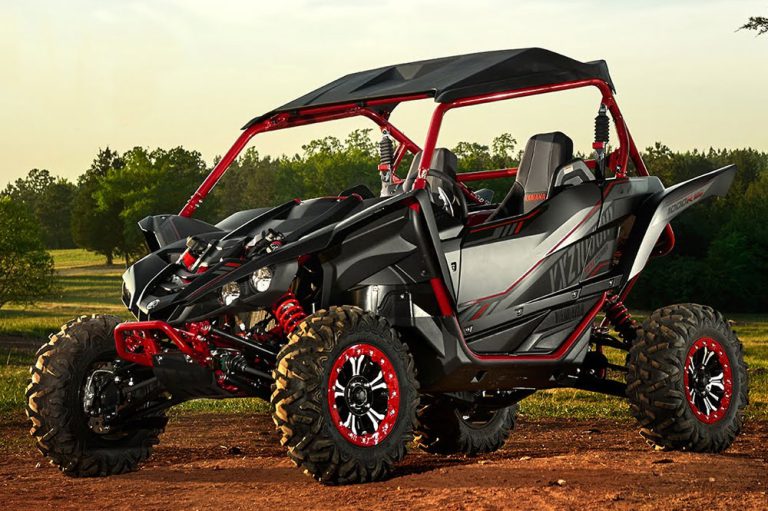
Luke is shredding the dunes in Glammis aboard Yamaha’s all-new and highly anticipated YXZ1000R SE featuring a 3-cylinder 998cc engine churning out an impressive 115 horsepower and an industry-first sequential shifting manual transmission.

Then Luke provides his opinions of the YXZ1000R pointing out exactly what he likes and what you may not like about this vehicle after getting a YXZ1000R on our home turf and spending some time out at our top secret test track.


Subscribe to our YouTube Channel!

Visions Of Victory – Episode 3 – Mint 400

The S3 Power Sports / Can-Am Race Team takes on the legendary Mint 400 to defender their championship title that they won in 2015.


Subscribe to our YouTube Channel!