Home Blog Page 163

Honda ATV Dual Clutch Transmission

0

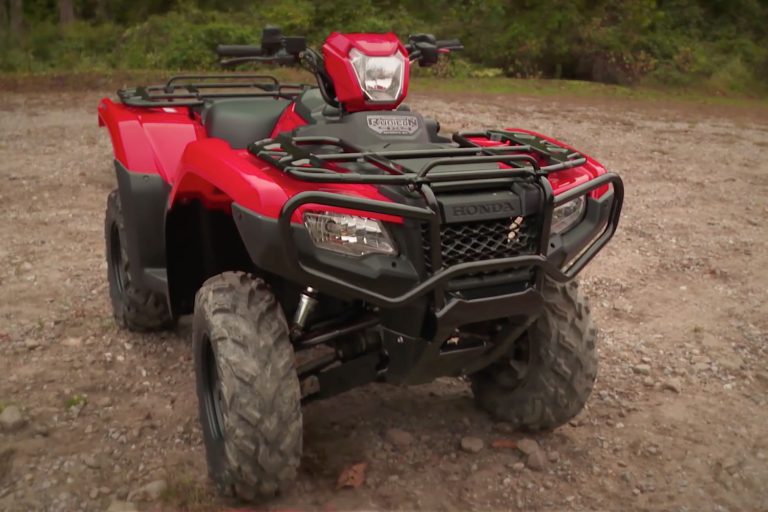
Luke gets to sit down with some of the team at Honda to take a closer look at the company’s technology – specifically its Dual Clutch technology now available on the new Foreman Rubicon and Rancher.

Subscribe to our YouTube Channel!

ELKA STAGE 5 SHOCKS

There’s no question off-road vehicle manufacturers are increasingly using strongly branded aftermarket components to add appeal to their products.

Can-Am likes Brembo brakes and KYB Shocks. Polaris likes Walker Evans shocks and Maxxis tires. There’s real value for the SxS and ATV buyer in these brands. All are perceived as higher quality, higher performing parts than what an OEM might otherwise supply.

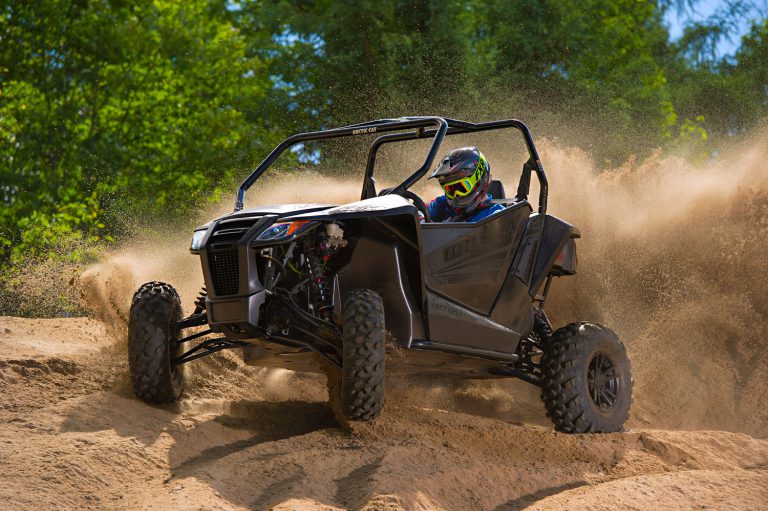
Arctic Cat more or less freaked us out with the announcement it would be supplying hand-built, serialized Stage 5 Elka adjustable dampers on selected Wildcats. Okay, we know Fox is a respected name and so is Walker Evans… and there are other shock builders with a strong market presence.

Here’s the difference: In our books Elka smacks of Mercedes/BMW quality, Ferrari performance and exceptional tuneability. Our experience with high performance off-road vehicles has convinced us Elka makes a premium product that adds tangible value to an already good vehicle.

So why do Elkas impress us? We’ll let you in on something the company does that makes a huge difference: Elka field tests its products before selling them. The company doesn’t just replicate a valve code or a damping spec from a computer aided design and performance program.

Elka’s suspension engineers participated with Arctic Cat to achieve ride quality that extracts every bit of the performance and control each chassis can deliver – not theoretical performance but real world performance.

Quality is a hallmark of the Elka brand. It ensures quality by building shocks one at a time, then testing every one of them on an MTS machine to ensure the valve codes perform the same every time. This is a painstaking and quite frankly, costly way to do anything in todayÂ’s off-shore dominated, mass produced, high-volume-or-nothing, world.

Elka shocks are made in Montreal, Quebec, Canada pretty much every day of the year. The company’s first business is to supply the aftermarket with fitments for hundreds of ATVs, motorcycles, snowmobiles and SxSs through an expansive dealer network across North America.

If you order a set of Elkas on a Saturday the company is often able to deliver your custom built, individually valve-coded shocks to your dealer by the following Saturday.

The attention to detail is evident when you hold an Elka shock in your mitts. However, the proof is in the ripping. Try a set on a new Wildcat Sport and see for yourself what we’re talking about.

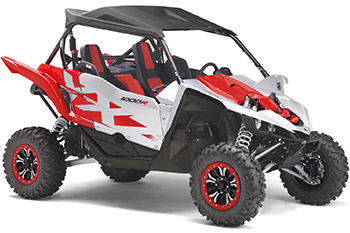
DRIVING YAMAHA’S YXZ 1000R

Yamaha’s YXZ 1000R sits at a significant horsepower disadvantage to others in the pure sport category.

However, its gear-on-gear manual transmission makes sure all 115 ponies produced by the 998cc 3-cylinder engine go to the back wheels. Simply put, measured at the back wheels, the YXZ is pushing power results that are very close to a Maverick or a RZR.

The YXZ stands out from the rest in a number of interesting ways but the most obvious is its 5-speed sequential manual transmission. To be honest, this is something you’ll either love or hate about the YXZ depending on how and where you ride.

A CVT makes life easy. Just jam your foot to the floor and go. There’Â’s very little thinking involved and it requires less skill to keep that engine spinning at its power peak. With a manual shifting transmission you have to not only be good with a clutch and understand how to power shift, but you need to understand when and where to shift or not shift.

It requires thought and skill to ride the YXZ really fast. However, this is precisely what makes it such a blast to ride.

Another interesting aspect of the YXZ is its non-turbocharged inline 3-cylinder EFI engine. Some would argue a triple is heavier, and therefore, a less optimal choice for a SxS than a twin. Our experience with the YXZ has been that due to its extremely well-thought-out layout of the engine and transmission, combined with that truly awesome 3-cylinder power, the YXZ feels light, nimble and fast. It really just highlights why Yamaha defines itself as a motor company first. This company knows how to build a darn good motor.

In terms of the chassis and suspension, the YXZ needs to make no excuses. Travel feels endless and incredibly plush, handling is excellent in all conditions and its unique rear suspension system with its lower trailing A-arm, supported by the biggest ball joints we’ve ever seen, is incredibly tough. Mega-quality Fox Podium 2.5 RC-2 gassers (rebound adjustable) are used front and rear.

Ergonomically, the YXZ feels right. The seats are comfortable, well bolstered and laid back at a nicely reclined angle. The driver’s seat is adjustable as is the steering wheel and the pedals and shift lever are perfectly laid out. The only complaints anyone has with the interior of the YXZ are that the outside shoulder bolsters are too intrusive and, in hot climates, the interior can get almost unbearably hot.

Style is a completely subjective topic. There is no right or wrong and what tickles one person’s fancy may cause another to gag. The YXZ looks aggressive and fast. The tall swooping fenders leave no question about the YXZ’s YFZ450 and Raptor ATV bloodlines.

The only area we’re not 100-percent sold on is the concave hood. Yes, the shocks do look cool sticking through and we understand that the nose was shaped this way to give the driver a steeper view of the ground in front of the vehicle, but to us, it looks weird. We don’t hate it, but we don’t love it and it’s definitely livable.

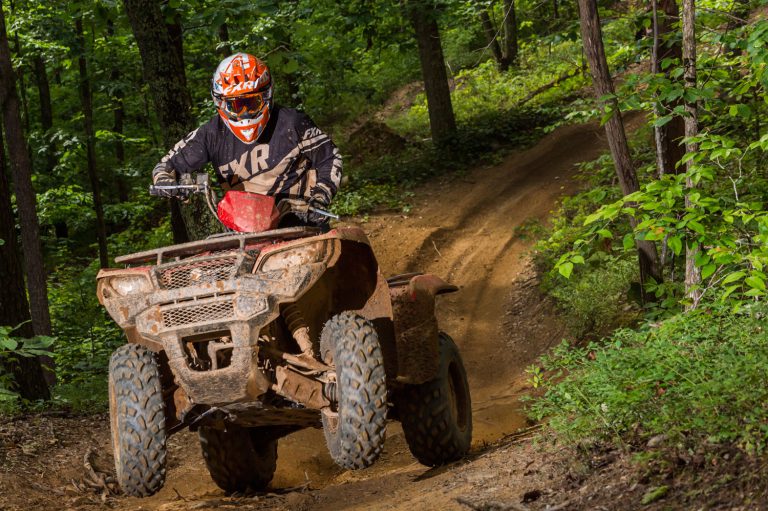
ARCTIC CAT XR 700 XT EPS

Arctic Cat has been building a solid reputation in the off-road biz for years now and when it comes to ATVs, that reputation has been anchored in a couple of stalwart attributes. First, Cat’s Sport-Utes are well-known for being faithful workhorses and second, their uncanny capabilities when 4WD is required.

From the earliest years 4WD was made available on its ATVs, Arctic Cat has offered incredible ground clearance – sometimes two more inches than any other competitor. This factor has had a profound effect on a Cat 4-wheeler’s ability to slog through deep mud and get over the gnarliest junk you can imagine.

Combined with the high ground clearance, the engineers have shunned any use of anti-swaybars on their IRS models allowing the rear wheels to operate completely free of one another – supposedly to maximize traction at low speed and in work situations. For over a decade we’ve commented on this, usually opining the company should move to a more conventional swaybar setup and soften up the suspension springs and shocks more.

The hard truth is, if you don’t have a swaybar, you have to compensate for body roll by using stiffer springs, or at best, dual rate springs so in high speed corners the ATV keeps its wheels on the ground and doesn’t yaw over left or right.

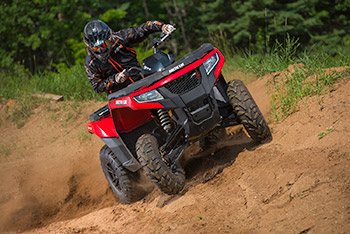
The new XR series of Arctic Cats display a fresh mindset from the Thief River Falls, Minnesota powersports company. All indications are the designers have turned a 180 and have focused on improved ergonomics, a more compliant ride and much improved handling at all speeds. It’s been no small undertaking and the results are impressive.

The good news is Cat didn’t mess with the ground clearance (still 11-inches), suspension travel (10-inches) or 4-wheel-drive system at all. Instead, they added a rear swaybar and measurably softened the springs. The driver’s seat is slightly lower and the handlebars are slightly higher and reshaped, lowering the center of gravity and helping with ergonomics when standing, sitting and transitioning between the two. The new riding position is a big improvement and when cranking the bars you never get the feeling you’re “reaching” to turn the handlebars to their full extent like before.

Chassis changes and revised double A-arm front end geometry has assisted with handling and because there’s less body roll, the ATV provides much more rider confidence from the driver’s seat – especially when braking hard on downhills or using the front brakes on loose surfaces at high speeds.

Riding bumps, the XR feels like it can use all of its travel before the springs and shocks begin to pack up. Because of this, the rider is suddenly aware of the shocks doing their job through their full 10-inches of movement. Body roll? Much better, although there’s still a bit when the ground is hard and the tires are biting. The difference now is, the handling is much more neutral and you can lean the ATV’s body without feeling you’re going to lift an outside wheel. It means you can keep the throttle on with confidence and break the back end free to generate oversteer. Nice.

We’d love to see Cat upgrade to gas shocks on its premium XR models. There are limitations with these standard issue ones and we think buyers who have already indicated they’re willing to spend a bit more to get more would welcome the extra cost. At best, these ones could use an adjustable damping feature to accommodate more driver weights and different riding conditions.

Before we go further we should point out what we feel is the new XR’s biggest flaw. The Duro Kaden tires Cat has chosen are the same tires or mighty close to what Yamaha has used in the past and what we’ve often complained about. No argument these are decent quality meats but they just don’t have an aggressive enough lug to perform well on wet, slick surfaces or in a submerged environment. If you’re riding in these environs, you need to upgrade – pronto! Likewise, if you ride on hard, rocky terrain all the time, you may be fairly happy with them.

A couple more items on our checklist: The SOHC 695cc single built by Cat in its St. Cloud, Minnesota engine plant is a torquey, strong-running 700 we’ve heard zero complaints about. Its calling card is bottom end grunt and it works extremely well for rock crawling and hard 4WD lugging. It’s CVT tranny is well calibrated to this mill and although it won’t set any land speed records, it is a very good 700.

We think Cat has truly focused on and achieved much better production quality recently. The XR is more than just a new ATV, it is a rethought, re-prioritized product that looks better, fits better and exudes better value. The transplanted gauge package looks better on this ATV and the styling is worlds better integrated than the former more dated “Jeep-style” front grill and organic body shape. The XR has a more modern, angular look and it’s really pleasing to the eye. We fully approve.

Overall, we’re really pleased with the new XR. Although it is not a ground-breaking, revolutionary approach to the sport, it is a huge upgrade from the former full-sized Arctic Cat sport-utes we’re accustomed to. Arctic Cat customers will be very pleased. The jury is out on whether or not other-branded buyers will be impressed enough to convert.

2016 YAMAHA KODIAK 700

0

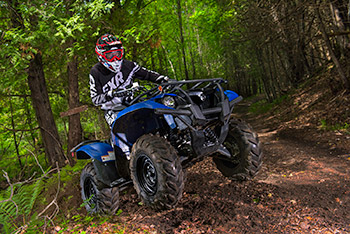
The 2016 base model Kodiak 700 gets overshadowed by the Grizzly, but there’s really not that much difference in the size department.

The Kodiak is less than 2–inches narrower, it is the same length and nearly the same height. Plus there’s a respectable 10.8 inches of ground clearance to get you over rocky terrain without tearing apart the underside of your ATV.

Here’s where things get really interesting though. Both the Grizzly and the Kodiak are using the same engine! Yamaha revamped its stout big bore single when it introduced the Wolverine side-x-side this past January and as predicted its all-new 708cc, 4-valve, fuel-injected engine has sprouted up in YamahaÂ’s ATV line in not only the expected Grizzly but also under the seat of the Kodiak as well.

The difference here is clutching. The Grizzly uses 18 gram weights in its primary to produce a harder hitting feel when the throttle is stabbed. The Kodiak on the other hand uses slightly heavier 30 gram weights, which smooth out RPM and create a more relaxed and casual riding experience.

Blasting down trails, the powerful engine responds to throttle input like a champ and there’s enough power to get the front wheels up whenever you’re so inclined. What’s the top speed? No idea. This package included no speedo (pretty much zero gauges of any kind – including a gas gauge), but it feels fast so weÂ’re saying a million MPH. A million seems right.

To compliment this impressive engine package is even more impressive ride quality. Suspension from the fairly basic shock setup and dual front and rear A-arm independent system is plush and smooth and even though we are just a bunch of babies spoiled by EPS, its absence goes nearly unnoticed on the base model Kodiak as handling feels predictable and controlled with very little harsh feedback though the handlebars.

Besides, if you want EPS it is available on the next model up. Stopping power from the front disc and sealed rear wet brake is simply on-point and as always weÂ’d like to point out weÂ’re fans of the dual brake lever.

To create a value line vehicle means sometimes you have to trim the fat and the base Kodiak is skinny on the extras. As we mentioned, there’s no speedo and no gas gauge to speak of except a fuel indicator light, which tells you the reason you have stopped is the tankÂ’s empty. Luckily though the Kodiak is equipped with a large 4.76 gallon fuel tank located under the seat, which creates the sensation of centralized balance further “fueling” (pun) the sensation of a controlled ride while navigating your local trail system.

Not to belabor the fact that the base Kodiak is light on extras, but at some point you’ll notice it doesn’t have diff lock. You’ll have to shell out a few more coins for that and the manual 4-wheel drive lever instead of a push button system seems wacky and cumbersome, but the important thing is that it works and it works well.

Realistically, you’ll probably be riding in two all day anyways and if the situation calls for it, simply flip the lever to engage 4WD and flip it back when you don’t need it. Tough to complain about something that works so well.

The Kodiak is being marketed as a farm use, utility ATV and we are darn sure it can do all that and more. However, if you’re thinking about moving into a big bore ATV and don’t want to break the bank, you can pick up a 700 Kodiak in the ball park of what other manufacturers are offering their 450’s and 570’s for and you won’t sacrifice anything in the way of performance. We think that’s a formula that’s going to sell some units.

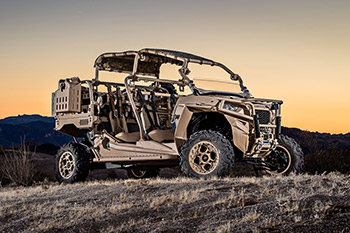
Polaris Defense Unveils Turbo Diesel MRZR

Polaris Defense, a division of Polaris Industries Inc., today announced the addition of a high-performance MRZR turbo diesel (MRZR-D) to its MRZR off-road vehicle lineup.

MRZRs have redefined ultralight, off-road mobility for military vehicles and are mission critical for expeditionary forces in the U.S. and more than 20 allied countries to meet mission demands and threats while forward deployed. Polaris Defense will publicly debut the MRZR-D at the 2016 Special Operations Forces Industry Conference (SOFIC), in Tampa, Fla., May 24-26, and at CANSEC 2016, in Ottawa, Ontario, May 25-26.

To be as expeditionary as the warfighters that use them, MRZR vehicles are V-22 helicopter transportable and can be configured a number of ways, including two-, four- and six-person. The turbo-charged diesel engine in the new MRZR-D has been engineered to meet the performance and physical specs of the original MRZR vehicles.

While many key features – like the dimensions, payload, towing, ground clearance, accessories, handling and other features – remain the same, Polaris incorporated feedback from the field in the new product, including updated occupant seating space, ergonomics and sightlines. The MRZR-D also provides increased auxiliary power and greater range, making it even more effective.

“The new turbo diesel powertrain is significant in reducing the logistics burden for select U.S. services and many foreign militaries that have strict requirements for diesel fuel,” said Jed Leonard, senior manager, Polaris Defense. “And as importantly for our military customers, we’ve engineered this diesel powertrain to meet the same mission requirements and extreme off-road performance that Polaris and the MRZR are trusted for in peacetime, security operations, and conventional military missions.”

“Throughout the last three years, we’ve had an open dialogue with Polaris about how we were using the MRZRs, and enhancements that would help us complete our missions more effectively. This has been very beneficial to us in the program office and the warfighters as Polaris has incorporated our requests. In the case of the MRZR-D, we suggested changes to improve sightlines and ergonomics which were incorporated,” said Brendon Reedy, LTATV acquisition program manager, PEO-SW/FOSOV, USSOCOM. “It’s nice to see commercial companies such as Polaris continue to invest in the Defense industry and we’re happy those investments have resulted in a turbo-diesel MRZR.”

Production continues for the original gas powertrain MRZR 2 and MRZR 4 under the LTATV program for USSOCOM and other international contracts. Orders for the 4-seat turbo-charged MRZR-D are being accepted now, with production and deliveries also starting this year. The MRZR-D will be in Polaris Defense booth #1735 at SOFIC in Tampa and booth #331 at CANSEC in Ottawa.

Polaris Defense vehicles deliver a coveted combination of deployability, versatility and off-road mobility, forged from more than 60 years of off-road vehicle experience that is simply unmatched. From the rugged Sportsman MV 850 to the modular and nimble MRZR, to the trophy truck inspired and ultimate off-road payload capable DAGOR, the enhanced tactical mobility provided by Polaris vehicles gives an advantage back to dismounted troops, allowing formations to move faster, carry more and significantly reduce combat fatigue. And because the vehicles are in service throughout the world, there is a high degree of interoperability and commonality among U.S. and allied forces. An established network of more than 1,400 Polaris dealers and distributors provide military vehicle training, service and support worldwide.

Polaris Industries Inc. (NYSE: PII) is a global powersports leader with annual 2015 sales of $4.7 billion. Polaris fuels the passion of riders, workers and outdoor enthusiasts with our RANGER®, RZR® and Polaris GENERAL side-by-side off-road vehicles; our SPORTSMAN and Polaris ACE all-terrain off-road vehicles; Victory and Indian Motorcycle midsize and heavyweight motorcycles; Slingshot moto-roadsters; and Polaris RMK, INDY, Switchback and RUSH snowmobiles. Polaris enhances the riding experience with parts, garments and accessories sold under multiple recognizable brands, and has a growing presence in adjacent markets globally with products including military and commercial off-road vehicles, quadricycles, and electric vehicles.

polaris.com

POLARIS COO RETIRES

Polaris Industries Inc. (NYSE: PII) today announced that Bennett Morgan, President and Chief Operating Officer, has retired.

Morgan joined the company in 1987 and took on increasing roles of responsibility, including leading Polaris business units, until he was promoted into his current role in 2005.

“Bennett dedicated his career to growing Polaris into the global powersports leader we are today. We thank Bennett for his significant contributions over the last 29 years and wish him well in his retirement,” said Scott W. Wine, CEO and Chairman of Polaris.

The company does not plan to hire a new President/COO; Wine will assume responsibility for Morgan’s direct reports.

Polaris Industries Inc. (NYSE: PII) is a global powersports leader with annual 2015 sales of $4.7 billion. Polaris fuels the passion of riders, workers and outdoor enthusiasts with our RANGER®, RZR® and Polaris GENERAL side-by-side off-road vehicles; our SPORTSMAN and Polaris ACE all-terrain off-road vehicles; Victory and Indian Motorcycle midsize and heavyweight motorcycles; Slingshot moto-roadsters; and Polaris RMK, INDY, Switchback and RUSH snowmobiles. Polaris enhances the riding experience with parts, garments and accessories sold under multiple recognizable brands, and has a growing presence in adjacent markets globally with products including military and commercial off-road vehicles, quadricycles, and electric vehicles.

polaris.com

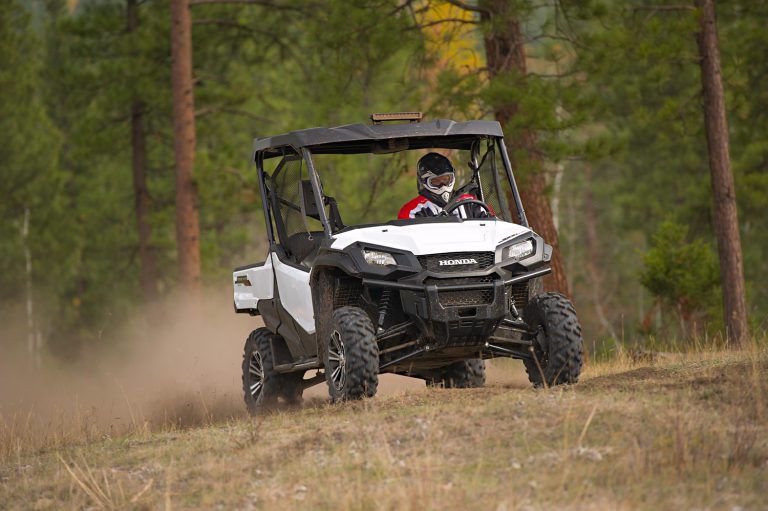
HONDA PIONEER 1000 3-SEATER

0

Honda tends to play it conservatively, which is why we were pleasantly surprised by the announcement of a new 999cc parallel twin in an all-new Pioneer chassis. After riding the 3-seater version we walked away with some pretty strong impressions.

First off, this mill is powerful. It snarls out a throaty growl at trail speeds and power delivery to the ground is competitive for this class. Its bottom end torque is very evident enabling it to climb steep grades with ease. Even when fully loaded with three bodies and cargo in the bed, there’s enough power on tap to keep the ride more than spirited.

The Pioneer 1000 utilizes Honda’s Dual Clutch Transmission, a fully automatic 6-speed mechanical system that ends up working surprisingly similar to a CVT providing smooth upshifts and responsive downshifts as RPM levels and loads change.

How does it compare to CVTs found in competitive UTVs? We found the biggest shortcomings of the DCT tend to come when climbing hills or transitioning into and out of corners at speed. In these situations, in automatic mode, it felt as though the DCT was searching for the right gear, upshifting and downshifting until it made up its mind.

Granted, it gets better as the driver gets more used to the tranny but It was annoying at first. The good news: Power levels tended to remain pretty consistent regardless. All this said, these are small problems and the more we drove the Pioneer 1000 the less issue we took with it. Truthfully, red undie-wearing loyals and those inclined toward gear-on-gear transmissions will love this setup and the benefits that come along with eliminating belt wear and belt maintenance.

The coolest feature of DCT is its ability to go to full manual mode via the dashboard mounted toggle switch and utilize the paddle shifters located just behind the steering wheel at the nine and three o’clock positions.

We spent quite a bit of our ride in manual which put us fully in control as we transitioned those same corners and steep inclines, downshifting as we entered the corner, holding the shifts a little longer as power built, then with a quick flick of the finger feeling the acceleration hit as the Pioneer transitions out of the turn. If Honda responds to Yamaha’s YXZ with a pure sport SxS someday, we suspect we’ll find a version of this engine with these same manual paddle shifters.

The Pioneer has an impressive ride and, pretty much like any Honda off-road vehicle we’ve ever tested, the handling is top drawer. Its electrically assisted power steering (EPS) is among the best in the industry providing a near-perfect amount of very linear assist to make navigating tight trials easier and soaking up big hits from trail chatter without bringing negative feedback into the rider’s hands. When steering effort regresses gradually as speeds build, handling remains predictable.

The KYB monotube gas shocks at all four corners provide adequate suspension compliance. We did find the rear shocks to be set too soft in their stock setting and a slight adjustment dramatically improved the Pioneer’s ride. We recommend dealers tune in a slightly stiffer stock setting out of the crate as we doubt the average rider will take the time to make the adjustment themselves. Furthermore, under load or weighted down with cargo, ride quality could suffer.

Our biggest recommendation in the suspension department is for the 3-seater to be placed on par with the 5-seater Deluxe equipped with Sachs Nivomat self-leveling rear shocks. These are awesome shocks and would add a ton of sizzle to this “sportier” Pioneer.

Strange marketing, but Honda released both the 3-seater and 5-seater at the same time and it seems the 5-seater got all the hot accessories. Those Nivomat shocks would give the 3-seater an advantage over the Polaris Ranger and the new Can-Am Defender and would provide unmatched ride quality and infinite adjustability for this utility class.

Just dreaming here, but we’d love to see a Deluxe version of the 3-seater equipped with EPS, painted body panels, cool wheels, ultra bright LED headlights and the Nivomats.

Though sporty and powerful, the Pioneer 1000’s primary directive is still utility-focused. Its dumping cargo box can hold up to an impressive 1000 pounds and it can tow up to 2000 pounds. Turf mode and full diff-lock are also standard as well as low range so the Pioneer is ready to handle whatever drill you can throw at it.

At the end of the workday though, open up the standard half doors and drop your butt into its durable, comfortable seats and it’s ready to be ridden as gently or as roughly as you can handle.

We expect Honda to continue this hard-hitting approach to its powersports division and as sales of the Pioneer 1000 continue to grow, we think this influx of cash will be reinvested into still more competitive offerings.

As for the Pioneer’s 999cc inline twin, we think it would look great tucked under the seat of a Rincon. Don’t you?

CAN-AM RENEGADE ATV RACERS GO 1-2 AT LIMESTONE GNCC

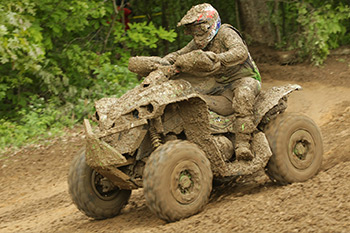
Can-Am X-Team racer Jordan Phillips won the 10 a.m. overall and the 4×4 Pro class at the Limestone 100 Grand National Cross Country race in Springville, Ind. Fellow Can-Am Renegade 4×4 ATV racer Robert Smith joined Phillips on both the overall and class podiums, giving Can-Am a 1-2 finish on the day.

“The Limestone 100 was one of the most challenging, muddy GNCC races in quite some time. Anytime you can end a muddy two-hour GNCC race with a victory, three in the top five and still maintain the 4×4 Pro class points lead, you have to be pleased,” said Jeff Leclerc, Racing Project Leader, Can-Am. “Jordan Phillips earned another big win this year and continues to make huge strides in his chase for the championship.”

Round six of the GNCC series was a muddy mess and one that challenged both man and machine, as only 51 of 258 total riders in the 10 a.m. session were able to complete all five laps. The filthy conditions were no match for Phillips and his Can-Am Renegade 1000R ATV. The Renegade ATVÂ’s awesome power propelled him to the holeshot, while its dependable performance helped Phillips stay in the top two the entire race in spite of dozens of deep mud holes, numerous lapped riders and fierce competitors.

“Wow, what a race! I pulled the holeshot and battled for the overall all day long. My Can-Am Renegade ATV was amazing today is dismal conditions. I’m thrilled to have pulled off the win,” said Phillips. “Thanks friends, family and all of my sponsors!”

Philips and Can-Am X-Team teammates Kevin Cunningham and Robert Smith battled for the win. In the end, Philips edged Smith by 14 seconds for the victory. Smith led after four laps, but lost some time on the final lap and had to settle for a very respectable second-place finish, his best of 2016. Cunningham was the race leader after two laps, but ended up fighting through traffic and the sloppy conditions to notch a solid top-five finish. His fifth top-five run of the season maintained his current No. 1 position in the class points race.

Phillips is the first 4×4 Pro class racer and Can-Am X-Team member to record more than one victory in the first six rounds of the 13-round GNCC ATV schedule. Phillips, who also won round three in North Carolina, currently sits in fourth place in the 4×4 Pro class standings with his Can-Am Renegade 1000R ATV.

GNCC round five winner Cody Miller, defending 4×4 Pro class champion Bryan Buckhannon and Zac Zakowski rounded out the top 10 in the 10 a.m. overall, in sixth, seventh and 10th place, respectively, aboard their Can-Am ATVs. Can-Am racers also swept the 4×4 A/B class podium and won the 4×4 Senior class in Indiana.

BRP (TSX:DOO) is a global leader in the design, development, manufacturing, distribution and marketing of powersports vehicles and propulsion systems. Its portfolio includes Ski-Doo and Lynx snowmobiles, Sea-Doo watercraft, Can-Am all-terrain and side-by-side vehicles, Can-Am Spyder roadsters, Evinrude and Rotax marine propulsion systems as well as Rotax engines for karts, motorcycles and recreational aircraft. BRP supports its line of products with a dedicated parts, accessories and clothing business. With annual sales of over CA$3.8 billion from over 100 countries, the Company employs approximately 7,900 people worldwide.i>

brp.com

SUZUKI KINGQUAD UPDATE

0

At one time Suzuki seemed unstoppable. The LTR450 was putting a rider on the podium every race and was the focus of every ad campaign.

Then the market collapsed, the LTR450 got the axe and Suzuki more than any other Japanese manufacturers became withdrawn. Ad budgets disappeared, any sign of progression in its offroad division was sidelined and the most anyone heard were rumors of updated stickers. It didn’t look good for Suzuki and like many in the offroad community; we’d begun to lose hope.

Last summer marked the first communication from a Suzuki representative to grace our inboxes since the QuadSport Z400 press event six years ago! We were invited to Georgia for a re-introduction of the KingQuad 500 and 750 and also to get a tour of Suzuki’s Rome, GA assembly and manufacturing facility.

Our opinion of the KingQuad has been something our viewers and readers have been asking us about for years, however without press units available, we’ve been unable to properly evaluate one or compare it to other units on the market.

The KingQuad was always a great ATV and in its hay day stood shoulder to shoulder with any sport utility ATV on the market and it is still relevant today, though we do see some shortcomings.

Where we’ve seen advancements from other manufacturers over the past five years – even the smallest steps year to year over time have left the KingQuad feeling dated. Updates to front end geometry and suspension calibration is needed to put ride and handling at the level of a Grizzly or Sportsman and a bodywork update should definitely be on Suzuki’s shortlist. That said, it is still a well-built and relevant ATV and there’s something there for Suzuki’s marketing team to work with, which will inject some much needed inspiration into its dealer network.

Takahashi Hayasaki was recently appointed President of Suzuki Motor Of America and appears to be driven to put Suzuki ATVs back on the map and re-establishing communication with the offroad media and highlight the KingQuad as the company’s flagship ATV.

Our tour of the Rome, GA manufacturing and assembly facility showed us plenty of hard working Americans diligently assembling the KingQuad from the ground up. The 500 and 750 engines are both assembled in this plant, the bodywork is manufactured in Georgia and the whole ATV is assembled on its state of the art line.

There’s clearly a dedication to the brand and as Suzuki works its way back into the hearts and minds of loyal Suzuki brand junkies we anticipate this newly found enthusiasm will result in new, and groundbreaking technology.

So what’s new from Suzuki’s ATV division? In a word, hope.