Home Blog Page 68

FULLY DECKED OUT KRX 1000!

0

Kawasaki Canada just sent us a brand new 2020 Teryx KRX 1000 fully loaded up with some really cool aftermarket parts and accessories. Luke’s combing over every inch of this vehicles before he takes it out for a full-on TEST RIDE.

Subscribe to our YouTube Channel!

WILL CAN-AM USE BRP’S PDRIVE CLUTCH?

0

When we’re dealing with off-road brands with deep roots in the snowmobile business, like Polaris, Yamaha, Arctic Cat and BRP, there are often opportunities for these particular OEMs to piggyback development of technology for both off-road as well as snowmobiles.

The advent of an entirely new primary clutch developed by BRP’s Ski-Doo snowmobile division begs some commentary. From our perspective here at DirtTrax we have a birds-eye view of the company’s pDrive primary CVT clutch. The concept of re-engineering age-old “sliding button” torque tower clutches has been discussed for many years.

The sliding button design deals with horrendous friction in high horsepower applications. As horsepower and RPM increases so does the friction on the sliding buttons located on the primary clutches fixed spider. This friction is made more massive by this design reality: As the moveable sheave moves inward pushing the drive belt upward, the sliding buttons’ engagement of the torque towers is moving further away from their starting point on the moveable sheave.

The loads on the torque towers are ridiculous. Basically this friction and load component is overcome by heavier flyweights that generate centrifugal force, pushing the moveable sheave in, overcoming the clutch spring’s force which is required to push the moveable sheave away from the fixed (inner) sheave.

In the world of snowmobiles this movement is subject to forces generated by engines producing over 160-hp (in Ski-Doo’s situation) and over 200-hp in some competitive snowmobiles.

The pDrive “roller tower” primary changes all the rules in the snowmobile primary clutch paradigm. Instead of sliding buttons dragging their way up and down the torque towers, Ski-Doo has designed a roller system – actually three rollers – to take the loads generated when moving the belt up and down on the inner and outer sheaves.

The introduction of the pDrive roller primary required a complete re-think of calibration components, specifically the flyweights and spring, to adjust to the dramatically reduced friction.

So the question remains: Will the innovative and super efficient pDrive roller tower primary clutch find its way onto Can-Am off-road vehicles? For sure, the pDrive could handle the power output of Rotax’s current stable of turbo and non-turbo 4-strokes. Here’s where I think there may be a wrinkle: Dirt.

Yep, the environment SxS and ATVs operate in is understandably dusty and dirty. The exact opposite is true of snowmobiles. Snowmobiles don’t even run foam or paper air cleaners! Why? Winter does not produce the gritty dust and dirt these snowbound engines operate in.

So what about pDrive and dirt? We suspect pDrive may need a more sophisticated filtration system to keep out gritty dust and dirt to ensure the clutch doesn’t experience rapid wear in dirty conditions. That’s just a guess right now.

One thing’s for sure, savvy off-road racers might be well advised to explore the pDrive primary clutch. There are likely performance improvements and efficiencies that could be gained using pDrive under controlled high maintenance, racing conditions.

THE NEXT SINGLE SEATER

This is a complicated question because there are a number of factors to consider.

First and foremost, the question hinges on whether or not the RS1 is considered to be a success in the off-road marketplace. Yes, a lot of owners are in love with this single-seater cross between an ATV and a RZR; but is the market for this type of vehicle big enough to warrant the investment needed to build a competitor to it?

Let’s keep in mind; the conventional ATV biz isn’t exactly dead or replaced by the RS1. There are zillions of ATVs still out there being used daily, and sales, although not as robust as they were ten years ago, are still decent. It’s already been made pretty clear there are ATV customers, there are SxS customers and there are RS1 customers.

True, those who experience the RS1 love its similarity to driving a fully jammed RZR, but having more than one vehicle like this could kill the RS1’s market and end up being a flop for both Polaris and for whomever decides to compete.

It’s a gamble.

But let’s let our minds go wild for a moment. Which competitor would be the candidate to come up with an ACE clone? First, we don’t think the Japanese OEMs would try to tap this market. The investment in tooling and R&D for the potential return just doesn’t fit the conservative footprint of Yamaha, Honda, Kawasaki or especially, Suzuki.

We think the best two candidates would be Can-Am or Arctic Cat. These companies keep a close eye on the pulse of Polaris and build their product lines very closely aligned with what Polaris offers.

If the sales stats were clear, we could see either one of them offering a single-seater. Both have an enormous selection of engines and a long list of patents and engineering innovations that could prove useful for a venture like this.

We’d put our tallest money on Can-Am, who loves to surprise us with new and innovative products all the time. It’s fun to think of a 1000cc V-Twin hybrid using the best chassis features of the Renegade and the Maverick X3 to produce a super-high performance single passenger rocket with maybe even some of the tech features of the Can-Am Spyder thrown in.

Which raises another question: Is the best market for an RS1 clone ultra-performance driven or is it closer to Utility?

Time will tell.

Defender 6X6: Everything We We Like and Don’t Like

0

We’ve had our Can-Am Defender 6×6 since last fall and have had the opportunity to do some longer-term testing and really see what it can do. Luke’s got some likes and dislikes he wants to share with you following his full review of this vehicle on the show last season.

Subscribe to our YouTube Channel!

BRUTE FORCE REVAMP

Kawasaki has been doing a great job with updates to its SxS model line-up and those products have really stepped up to meet the competition head-on.

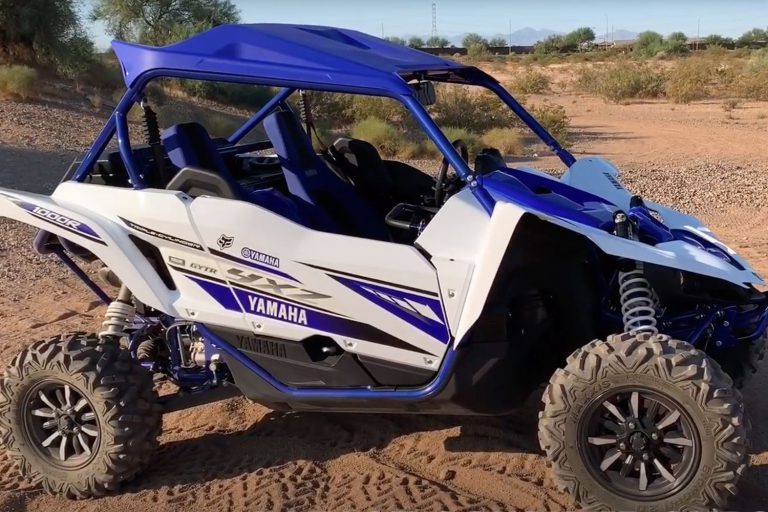
The MULE lineup saw some big changes and updates the last couple of years and obviously the introduction of the KRX has put Kawasaki solidly on the pure sport map.

When it comes to ATVs, the “Big K” has been pretty quiet. It almost seems like the company’s focus has pivoted over to the UTV biz and not much is happening with ATVs. In fact, the number of Kawasaki ATV models offered in MY2020 is rather scant.

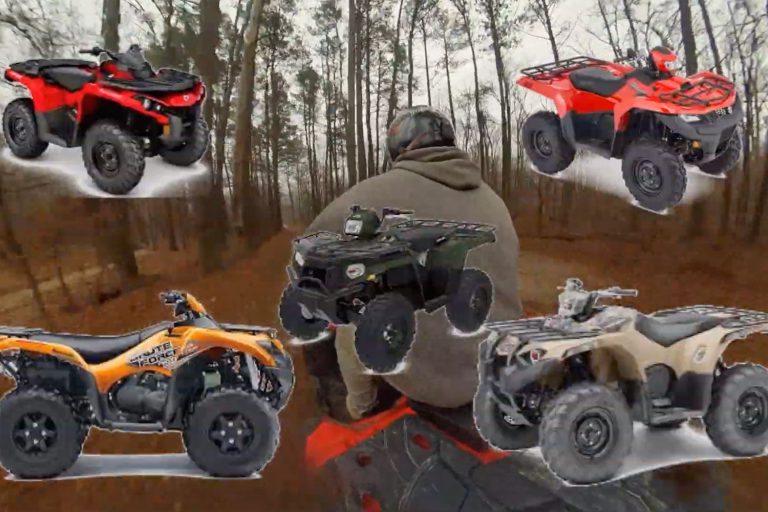
However, the Brute Force is still around and serves as the flagship of the Kawasaki ATV brand.

There hasn’t been much updating of the biggest Brute Force – the 750 4x4i – in a few years, but its bones are very good and it has a proven track record for reliability and performance.

Thus, you could argue: “Why bother with an update?”

One reason to change the Brute is because the competition isn’t doing much in its class either, right now.

The Rincon, Grizzly and the long-submerged KingQuad haven’t seen new injections of displacement and power for almost a decade. To be fair, Yamaha has steadily progressed its Grizzly’s chassis evolution but it still maxes out with a 686cc single as it’s top engine.

The time could be ripe for Kawasaki to put some focus on itself against its Japanese branded competitors with an upgrade in power and new, distinctive bodywork.

One big asset Kawasaki has is that the Brute Force’s powerplant is a V-twin versus those aforementioned competitors that use big displacement singles.

Upping the displacement on that big-inch V-twin to, say 850ccs, would enable the engineers to likely use the same castings and just make adjustments to the bore and stroke measurements.

Even the Teryx V-Twin’s 783cc displacement could work here. It sounds plausible and makes sense from a production standpoint.

As far as bodywork goes, Kawasaki has always been a leader in styling and function with its off-road vehicles. We’d love to see the designers come up with a new look and maybe even some ergonomic adjustments. Top it off with some new digital instrumentation stuff including a built-in GPS and suddenly heads start to turn!

If Kawasaki really wanted to spin some heads they could up the width of the Brute to 55-inches.

The off-road business is ever changing and resting on your laurels is rarely an option. We think the opportunity to move is here right now, but does Kawasaki have the will to make changes?

2-UP ATV OR SIDE-X-SIDE?

We recently ran a poll on our YouTube channel asking what your preference would be if you were looking for a 2-rider offroad vehicle.

The choices were pretty simple and straightforward: 2-up ATV or a SxS?

It seems like it would be a no-brainer the choice by a wide margin would be the SxS and because 2-up ATVs are targeted at a relatively narrow market, the numbers choosing them would be very small.

We were surprised at the number of replies we got supporting the 2-up ATV. Yes, it lost in the polling but not by nearly as wide a margin as we expected.

There were 2,800 poll responses and 89 people made comments supporting their position. In the polling biz, that’s a significant response.

The side-x-side choice scored 76 percent of the votes while the 2-upper recorded 24 percent.

Yes, this is a pretty significant gap, but based on the huge selection of UTVs out there and the relative scarcity of 2-up ATVs in the OEM sales brochures, we were surprised these vehicles had as much grab in the poll as they did.

Since we didn’t specify which type of SxS we were comparing, we presume the responders were mentally comparing side-x-sides in the same price range as an ATV and ones that are targeted at similar use to an ATV.

This would mean a narrower stance SxS with somewhere between 400 and 850 power for maximum trail-ability, not extreme performance and acceleration.

With such a strong response to the poll and not a lot of specifics built into it, it’s pretty conclusive off-road shoppers like to ride with accompaniment. We’ve known this for a long time and with the price of vehicles today, it’s important to appeal to all the wants of prospective buyers.

The long wheelbase convertibility of a 2-up ATV still has a lot of appeal. It may be wise for the OEMs to rethink their emphasis here and start building ATVs that fit that market more closely.

Cleary, there are a lot of riders out there who choose not to buy a SxS, even when 2-passenger capability is a big priority.

2020 Polaris RZR PRO XP 4 Ultimate Overview

0

We just got a brand new 2020 Polaris RZR PRO XP 4 Ultimate featuring the 181 horsepower turbocharged twin, DYNAMIX 2.0, Ride Command and built-in Rockford Fosgate Audio. This is the highest level of RZR we’ve had on site and can’t wait to give you our full test in the coming weeks.

Subscribe to our YouTube Channel!

POLARIS LEADS INNOVATION

Whether or not you’re a brand junkie for Polaris there’s no argument against the company’s determination to take the off-road industry in new directions and make it its own.

We’ve sat around the video chat and come up with a fast five top Polaris innovations we feel have changed the landscape of the off-road industry. So let’s get at it…

RZR

The press release for the “Ranger RZR” was first posted to this website in January of 2007, but we got our first look a few months prior and I can still remember the doors of the meeting hall swinging open to reveal the first Pure Sport Side-x-Side ever.

At 50-inches wide and 945 pounds it was the lightest UTV the industry had ever seen and was narrow enough to fit down most ATV trails. Polaris stuffed its own 800 EFI twin inside boasting at the time the fastest accelerating, highest horsepower in its class. Needless to say, Polaris invented the Pure Sport SxS category and the legendary RZR deserves top honors on our list.

Read the press intro HERE

DYNAMIX

Introduced in 2018 on the RZR XP Turbo DYNAMIX Edition, DYNAMIX Active Suspension delivered the industry’s only intelligent off-road suspension system. RZR pilots now had full control of their RZR’s suspension setup from the cockpit via an electronic adjuster.

The brain of the system monitors input from seven different sensors and adjusts firmness of each of the Fox Podium 2.5 RC2 shocks independently from full soft up to full hard in a fraction of a second delivering unmatched ride quality.

The driver also has control of the base suspension settings by selecting Comfort, Sport and Firm depending on how aggressively you’re riding or how DYNAMIX needs to adapt to terrain. We fully expect DYNAMIX to show up in more Polaris models in the coming model years – like the 55-inch wide Scrambler and we’ve also speculated that DYNAMIX would be a perfect fit for Polaris snowmobiles as well.

Watch Luke’s in-depth overview of DYNAMIX HERE

SCRAMBLER and SPORTSMAN XP 1000 S

Maybe it’s the answer to a question few knew was being asked, but building on the idea of the robust RZR Turbo S, last season Polaris widened the Sportsman and Scrambler XP1K out to 55-inches and beefed up just about every imaginable area on these ATVs. Stability and ride quality are through the stratosphere thanks to the widened stance and increase in suspension travel and both ATVs see massive increases in durability.

Get THE DIRT on these two ATVs HERE

ACE AND RS1

Okay, so a single-seater isn’t exactly new, if you remember Honda’s Odyssey or the Redline Revolt. However, that doesn’t take away from the introduction of a modern single-seater from Polaris featuring an all-new ProStar 32-horsepower single. The Sportsman ACE built on the passion of driving Side x Sides but its compact design was unique and marketed as an alternative to swinging a leg over the seat of an ATV.

As the ACE evolved though, it saw engine sizes increased to 570 and then 900 and sport features were added like performance suspension and a wider stance eventually leading to the introduction of the insanely awesome RZR RS1, which has taken single seat driving to an entirely new level.

Get our first look at the ACE HERE

RIDE COMMAND

You might not think this one is worthy of this list unless you’ve used it, but RIDE COMMAND is essentially the command center for your Polaris vehicle delivering vehicle information, music, Bluetooth and USB connectivity, GPS, social media interaction, front and rear camera display, and vehicle diagnostics. The 7-inch wide full color display also works in coordination with DYNAMIX, giving you touch screen control over your suspension from the comfort of the cockpit.

Did we miss any? Leave a comment below!

MAD-RAMPS: The best all-in-one solution for transporting your ATV or UTV

0

Luke reviews the innovative ATV and UTV pivoting ramp loading system from MAD-RAMPS. The outboard design mounts quickly to any 2” hitch receiver making loading and unloading incredibly easy while also freeing up cargo valuable space in the bed of your truck. With multiple attachments and accessories available, including a system for snowmobiles, MAD-RAMPS has a solution for you!

Subscribe to our YouTube Channel!

55-INCH WIDE ATV MARKET HEATING UP

0

Polaris recently released the answer to a question few realized they were asking when it showed us the beefed up 55-inch wide Sportsman and Scrambler XP 1000 S.

The wider stance of these two ATVs is more suited for wide-open desert trail ripping than most of the trail systems across North America that accommodate standard width ATVs. However, Polaris saw a gap in the market that presented an opportunity – and so here we are.

This isn’t uncommon for Polaris. Without question, the company is the leader in introducing innovative off-road products and, in many cases, creating entire market segments. This 55-wide thing leaves us wondering when or if other competitors will respond. Let’s explore the potential of seeing a 55-inch wide Can-Am Outlander or Renegade.

Polaris brought us the Scrambler – the first of its kind – but then Can-Am took it to the next level, building the fully independently suspended Renegade with monster power. The Renegade was decidedly aimed at recreational trail riders who had little need for an ATV that could handle work duties. It took a bit of time but Polaris soon morphed the legendary Scrambler into what we have today – a direct competitor for the Renegade.

We’ve seen this play out in the 6×6 category with Can-Am’s response to Polaris’ Big Boss. The Outlander 6×6 is as much pure performance as it is a capable worker. In fact our test pilots have noted they’ve forgotten at times there’s an extra set of wheels out back while they blast through trails and down fire roads.

We anticipated Polaris would revamp its Big Boss to match this level of performance, but alas, the most recent update to the Big Boss was less than exciting and aimed firmly at work duties more than fun.

This isn’t to say Polaris is behind the times. In fact it sometimes feels like we’re waiting for Can-Am in a big game of catch-up, but more realistically, Can-Am seems to take carefully measured steps in responding to competitors while still engaging in the demand for high performance vehicles to meet the demands of the global marketplace.

If Can-Am does decide to offer a response to the 55-inch wide XP 1000S, it’s more likely that instead of presenting two high-performance variations, Can-Am would focus on its highest performance ATV and introduce a 55-inch wide Renegade 1000 first.

The biggest obstacle for this 55-inch market is price. To move from a Scrambler 850 up to the Scrambler XP 1000S you’re looking at almost a $5,000 (US) premium. To be competitive – at least against a Scrambler, the Renegade would have to land in this price range, too.

Remember, the Renegade X MR 1000R already tips the scales at over 15 grand US. The point is, although this may be a tad outside most shoppers’ budgets, there’s a very slim specialized market here that seems to have the cash to spend and Can-Am may just be patiently sitting back to see how the XP 1000 S will be received before it makes its next move.